Uncategorized

  • Té Teperedcé Kroné: The Debtor King, Part IV


                Two days he waited beneath the trees, and all his thought dwelt upon the woman he called Sulbhél. Still he could recall the touch of her hand upon him, unafraid and sure, with no forced form or courtesy because of his office, but mercy and a desire to help him, stranger though he was. Could the gold of Médash purchase such a prize? No; for in the face of such worth he feared his riches would fail.

                Just as despair began to wend its way into his heart, the hawk uttered its shrill cry above him once more and perched within a tree top, and by sunset the caravan arrove, a tent being pitched against the black night. Edhsél had led them and it was she who tended him in the stead of his usual servants.

                “Oh King, you are so badly burnt! Tell me how you survived, and how you came to be in the desert, and how it was that you came by this strange raiment and these provisions?”

                “Princess, by God’s hand alone have I been saved, for here in the desert sands did I encounter an angel; forever will I sing the praise of God for this boon. I have spoken, and will say no more.” And she did not press him.


                 When King Médash returned to the mountain that was his home, to the White Towers of Acton, after days of slow travel in the wastes, there was much rejoicing. For when all awoke days ago to find their king vanished, many feared he had been kidnapped by the father of one of the princesses, so the four of them were locked away until seven days had passed without word of his fate. All were released on that day and hawks were sent forth to discover such word of him as may be found, or perhaps his remains for burial. There was indeed much celebrating, and all four princesses dressed in their most splendid attire, and no such festival had been witnessed upon the Earth since Eve first bore forth Cain.

                The revelry continued for twelve days, the same number of days the king had been feared dead. On the tenth day at the noon hour, when all were feasting and making merry, a handservant came to the king and whispered in his ear that a peasant maid wished to speak with him.

                “Good servant,” Médash said, “can you not see that I am celebrating my return from the dead? Send her away with a gold coin for her trouble, and recommend she take up the matter with her magistrate.”

                On the eleventh day at the supper hour another handservant approached him, saying that a peasant maid wished his ear for but a moment and promised to then continue on her way. “Another? Were I to lend my ear to every peasant maid who called, I would exhaust myself! Send her away with two gold coins for her trouble, and see that she takes up the matter with her magistrate as well.

                On the twelth day at the hour of washing, when the king sat in a golden tub filled with hot mineral water from a spring deep in the mountain, and many lovely maidens were attending him, the handservant again came and said, “Majesty, please forgive, but a peasant maiden wishes your ear.”

                “At this hour? Does she not know that I have no audience after supper with anyone whom I do not call myself? See that she is given lodgings for the night, and send her away in the morning with ten gold pieces; I’m sure she has traveled far.”


                The next morning, while the king stood gazing afar out his window, again contemplating the difficulty of selecting a wife and, having been so distracted by the many celebrations so as to forget about the woman in the desert, a handservant came again and said, “There is a woman finely attired that wishes to speak with you; it seems to be an urgent matter.”

                “Very well!” the king said, “I will see this woman and discover what is her business.”

                His servant led Médash to a private audience room where a woman clothed all in black, with a veil over her face, sat upon a wooden chair. She lowered her head to him in homage.

                “Majesty,” she said in a sure voice, “I am Dauabré, and I am sent to you by my father who wishes to offer me as a bride fitting for this Kingdom.”

                Médash was perplexed, for all others had come in great splendor, yet she it was who arrove in obscurity, veiled and wearing a gown as if a shadow. The mystery of her entranced him, and though he saw naught ahead he went onward.

                “My Lady Dauabré, who is your father?”

                She rose up proudly to announce him, “The Lord Hornston of the Wastes, the Unknown King and Watcher of the Night. The people of this kingdom are in unknown debt to him who only now makes himself known, that in these days all kings might be known and their myriad daughters besides.” Returning to her seat the princess looked upon him with eyes that sparkled beneath the veil and pierced as sure as arrows, and he felt his mind was somehow laid out before her. If so, she would then sense his awe at such a mysterious claim. However in that moment he retained his calm and answered in a cool voice.

                “These are strange tidings, and skilled indeed is any man who so serves the people of my kingdom without anyone knowing of it. Still, I cannot dismiss this claim until the truth is known; therefore until that time comes you shall be a guest of these halls, with every pleasure at your disposal.”

                Rising again the visitor strode boldly forward, speaking to his very face, “Majesty, there is yet another tiding, one of great import. My father has given me only seven days more to remain here before I must depart, and so it is that you must either choose me or dismiss me within that time. However, he desires that I be chosen not for my beauty or my skill, for these things shall fade in time. Rather he will wed me only to a man who longs for what shall not fade but shall be everfresh, an oasis beyond the scorch of drought. Therefore, King, it is not I who am put to the test these dozen-and-one days, but rather Your Majesty. I shall pray that God grants you the wisdom to see the hearts of those king-born in your halls, that you may choose not another treasure, but a light by which to see all else you possess.”

                His servants escorted her away to her lodgings, and all his sight rested upon the swirl of black cloth that billowed behind her, the words she spoke echoing through the chambers of his heart. Striking him in that silence was the thought that often he did spend his long days weighing treasures and taking account of all his vaults, yet it was that never had he weighed himself, and he feared that were he to do so, he might be found lacking.


                That evening at dinner the king permitted only the five princesses to sit at table, and they had discussion. Edhsél spoke first, asking the king if he was fond of hunting, to which he replied, “Every autumn it is my custom to hunt the deer of the forest, and I hunt alone and lightly provisioned. I do not always find my arrows in the flanks of quarry, but I always return lighter in heart and refreshed in spirit. And yourself, Lady Edhsél?”

                Eyes wide in delight she spoke for nigh on an hour about some of her great escapades, the titanic beasts she had slain in the land where they yet dwelt—as though only the greatest and fiercest beasts were hunted, with all things less than a rhinoceros ignored entirely—and the manner in which she harvested trophies from each. Coming at last to her conclusion, she happened to turn to the new arrival, still shrouded in her dark dress and veil, then asking of her, “Pray tell, Newcomer; does it happen that you hunt also?”

                Princess Dauabré glanced at her and then to the king and said, “Where I come from, honored sister, we hunt not so much for beasts and trophies but for water. Sometimes, when the season is harsh, one must travel a day with no rest or shade to find it. I have gone down to the water’s edge and filled gourds and bladders while at my side was a lion lapping, or a serpent cooling itself in the mud. Yet because we all of us thirst, none of us are hungry, and there is a peace so long as our tongues are dry; I do not tarry to contest them once they are quenched.”

                Edhsél scoffed and said, “But, newcome sister, you could bring great honor to your house by killing that lion and wearing its teeth and claws!” Dauabré answered, “More honor is found in my land by taking only what is needed for one’s people, and leaving to God’s wild what belongs to Him. Were it that my people needed food and it was the lion that I found, then my dagger would pour its blood onto the sand and my people would eat.”

                There was a quiet after this, as though Dauabré had spoken some final word, and after a time Lílabhél spoke, asking, “Majesty, have you always lived within this mountain?” The tension within the air broke like falling ice on stone, and the King quickly responded by telling the tale of how he and one-hundred of his people journeyed from afar across the desert to escape the vampyre hordes that roamed its borders. They had become lost after a journey of seven days, but on the eve of that last day they spied the very mountain that would become their home, for in the dying light of the setting sun an exposed vein of gold blazed like fire, beckoning them to their destiny. The princesses listened attentively, but it was that the eyes of Edhsél were fixated upon Dauabré, studying her as though she were prey.

                At the rising of the following day’s sun King Médash summoned forth six litter-bearers, and it was that these litters bore hence himself and the five princesses all about the mountain city. Within the marketplace vast the four princesses that came from known lands went about having discourse with those of their countrymen they met, while Dauabré simply spoke with whomever she desired, for no one seemed to know of her. The King watched her with great interest, however, for while no person’s face was alight with recognition upon seeing her, yet the joy in their face after having spoken to her was greater than that of any other who spoke with one of the four. He took note, too, how it was that each princess returned to him with some goods from their countrymen; tribute and gift, they said, from the merchants doing trade within his kingdom. Yet Dauabré brought him naught but words of thanksgiving and praise from those she spoke with, and Médash found these delighted him more than all the goods offered him that day.
     

  • Té Teperedcé Kroné: The Debtor King, Part III

    If it was that he was dead, then Heaven seemed to him to be a wicker hut, and though this dismayed him the shade was cool and soothing. The angel by far was most pleasing, for she tended his wounded spirit with care, dampening his forehead and pouring water into his mouth. Heaven was a great deal of rest, and naught much more elsewise.


    He awoke in the night, or rather a night, for he knew not which night it was, and the moon cast tiger stripes of silver upon his sunburnt skin. Each movement stung and as he came upright his head swam. A hand then shot up from the floor like a striking viper, pressing upon his chest and insisting that he lie down.

    “You mustn’t move, horse-thief, or your skin will crack. Tomorrow when the blisters are healed I will put salve upon them, but until the sun rises you must rest.”

    He could not see the speaker in the dark, but it was for certain a young woman, and her voice was strong. Trusting that no harm would come to him in the night he lay down and stared at the moon through the wicker roof until his mind sank into sleep as if it were quicksand and it drowned all thought.


    The sun rose, bringing with it a warm breeze blew that blew over him like a divine breath. In the doorway he beheld a young woman with sun-darkened skin, clad in a brown tunic powdered with dust, a flowing skirt of coarse muslin billowing in the wind. Long, dark wavy hair was drawn back with string, bright streaks shot through as though the sun had combed its fingers gently through it all. Her eyes were copper-green and gazed upon him with the sharp ferocity of a hawk.

    “The horse thief awakens. Remain at rest, and I will fetch something for you to eat.”

    He lay silently and listened to the woman working busily nearby. He could hear the hollow tearing of bread, he could nearly taste and the very sound of it upon his starving tongue. Water was drawn, a pomegranate was peeled to expose the many red arils, and soon all was put upon a wooden plate and brought to him.

    “You may sit up, slowly, to eat. Consume this all very patiently; you have had nothing but milk and water for three days and have been nearly a corpse all that time.”

    “Three days? I must return…”

    “To where?” she cut, “Your camp or caravan or band has long left you for dead, and surely the man from whom you stole your horse has long given up on ever seeing the beautiful creature again.”

    “Good lady,” he replied, “that horse is my own; I am Médash, King of the Mountain.”

    The laughter that came of her was like a spring rain upon a river, and her dark brows arched as the backs of leaping harts! “A king!” she said in disbelief, “Oh Majesty, I should have put you on a feather-filled couch!”

    He smiled and, for once, felt no need to defend his claim, for he realized he had no gold, nor his signet ring, and was clad only in the blanket she had given him. Médash King of the Mountain was indeed a beggar, indebted to this desert girl.

    “Tell me, gracious hostess, to whom do I owe my life?”

    “You speak like one highborn, horse-thief, so I will play this game with you; I may be called the Lady Sulbhél by the Golden King.”

    “Very well,” he laughed, “I will indeed call you Silver, and you may call me whatever you wish.”

    “Then you shall be called Tirérn when I am feeling patient, or Tira when I am not, for you were but dust when I found you. I suppose now that you are fed and watered, you are nothing but mud. So eat, rest, and I will go and make a salve for your burns.”

    Médash ate slowly, feeling his strength returning to him, and when Sulbhél returned with a bowl of salve he had eaten everything. She drew the blanket down to his waist, and then up from his feet, until only his modesty was yet left to him, and at this she tucked the blanket beneath him.

    “This will burn at first and then numb, and by nightfall you will feel pain from the burns no longer. In two days you will be free to leave.”

    Lying in silence as she applied the buttery salve upon him, Médash breathed deeply as a cool burning pierced him, and sighed as it dissipated into his flesh with a warm rush. His mysterious benefactress focused upon her task while he watched her intently, and he felt something break within him. The mighty king, valiant in the hunt and strong in labor, lay back his head and allowed tears to silently fall, for so humbled was he by her service that he knew no gold could repay the kindness of this desert blossom.


                Two days passed and though his skin was yet a deep red, it pained him no further. His horse had been fed and cared for, and his blanket had been cut up for a loincloth and cloak. Sulbhél provided him with bread and water, a pomegranate and some hard cheese.

                “Where will you go now, Thief-King? You have tarried nigh on a week, and all will think you dead.”

                “I will go in the direction of the rising sun and hope that God will bring me either to my halls, or His own ere long. Have you no one to look after you here in the wastes?”

                She looked at him as though he spoke madness. “Wastes? Oh Highborn-Beggar, were it truly a waste, would I live here? I have fed and watered you for days not with sand but with bread and water, with milk and sweet fruits. God may shower blessing upon kings and their people, but even upon the poor comes a stray drop, and from such a shower as His a drop is more abundant than any would dare covet.”

                “But when I depart, will you be alone? You may ride with me if you wish.”

                “Oh, my father would be quite wroth were I to ride with a horse-thief, especially one so sun-touched of mind that he thinks himself a king! He returns on the morrow from the Mountain afar off, where the true King of Gold resides, and perhaps he will return with news that the very same had become lost in the desert, and I can say it was he that ate all of our pomegranates! Go, and may you find a herd of wild horses, that you need not steal another!”

                Mounting his great steed he looked down upon her, saying, “Lady, do you truly not believe me to be a king?”

                Her hawk-eyes pounced upon his wounded pride and broke its neck, and she said to him, “I see only a man who came to me with naught but a kingly horse and fine speech. But words and horses make not a king. Now go along and ride where you may; this game of fine words wearies my tongue, for it is used to plainer speech.”

                Médash departed with a heavy heart.


                For the whole of the day he rode through the flowing dusts, the very air leeching the water from his mouth and his mind rife with thoughts of his saving angel and her words. Deeply did he ponder his own sense of kingship, and within many aspects of his character he began to see cracks from the hammer-blows of her honesty where before were pristine and nigh on invulnerable edifices of confidence. Often he wondered if he should return at all, but just as the choice began to gnaw at his heart he heard a piercing cry. Swooping down from above was a hawk, one of his own, and it perched upon his shoulder. Its leg bore a small scroll in which was a message telling him to find shelter and send the hawk away. By sun’s set the creature would then return to lead a caravan to his rescue.

                The hawk remained upon his shoulder until Médash discovered a small oasis in the cleft of a dune valley. A spring bubbled up, and three trees grew around it. Shade there was aplenty and water, and there was rest to be had so he chose a sharp stone from the ground and, severing a lock of his hair, bound it about the hawk’s leg and dispatched it with his blessing.

  • Té Teperedcé Kroné: The Debtor King, Part II

    Médash broke fast the next morning with Edhsél at his right, Lílabhél at his left, and Bhéalmal at hers. There was yet much fruit upon which all delighted and bread baked in the great stone ovens of the mountain.

    There came of a sudden a messenger announcing the arrival of the final princess, the fair daughter of King Natanér of the North and his queen Selédenél. Right into his hall she rode upon a dappled horse, her long green cape draped upon it haunches. Her hood was upraised, veiling her face in shadow, but rumors of her beauty preceded her and soon enough the anticipation of all was ended, for pale hands were uplifted and, gently taking the edges of the hood, removed it to reveal three interwoven braids of long red hair as though of fire, and eyes of hazel set in a snowy face. Faerie-kisses dotted her skin as roses rising from winter’s pall, or sanguine stars in a white sky, and her smile was faint and sweet.

    “Oh King,” she began, lowering her head, “I am named Celereshél the Starkissed, daughter of Natanér of the North and Queen Selédenél of the Willows. I bring thee tribute: the furs of one-hundred mammoth beasts and their tusks, mineral water from the Springs of Cangrélan for your health, and twenty firedancers for your entertainment while I remain here. Also I bring four oxcarts of obsidian, I bring crystal from the deepest of our caves and ingots of iron, and I bring much mead for the enjoyment of your people.”

    Dismounting in one graceful motion, her long cape flowing off of the horse and pooling around her feet, she strode forward and knelt before him, head bowed, the silver circlet upon her head shining in the shaft of morning sunlight that bathed them both. Médash felt his heart leap at the sight of her beautiful locks, and the perfume of the oils in her hair and the ointments upon her skin filled his head with visions of spring in vales thick with flowers and honey.

    “Majesty of the Mountain, the final gift I offer is for your ears only. Will you receive it?”

    With a small motion of his hand, he granted her leave to continue. She leant in closer so as to speak softly to him.

    “My king, I have known of your greatness since I was but a small child upon my mother’s lap, sitting by the great fires within my father’s hall, too young yet for the long hunts and the drinking of mead. I heard tales of the King of Gold, whose mountain was full of treasure beyond compare. Even beyond these tellings I heard of your kindness, your generosity, and the love which you bore for your people, yet there was no Queen of Silver by your side, and no children of Brass, of Iron, of Emerald or other jewel. I pitied this king, for gold’s worth is in the eye of one who finds it beautiful and desires to hold it, and yet I saw his golden heart from afar off, then beholden by no eye, loving or no. Were I to have a treasury of my own, I would not need a mountain of riches to fill it; nay, but only a heart so kind as thine, of which the tales tell. I would possess such a treasure above all else, and offer likewise mine in exchange.”

    As she spoke, so soft as to be almost a whisper, he felt his heart weighing more heavy within him as though burdened by the loveliness it was drinking in. Soon his eyes quivered in weakness, and a mist rose above them, and by the end of Princess Celereshél’s message he had hidden his face behind his hands to catch each tear. No words had so moved him, and though it was not as though this woman’s beauty surpassed any other, no beauty and no tribute had moved him as did these words. It was as though she knew his very soul and smote it utterly to the quick.

    “My lady,” he muttered softly, taking her hands in his own, “I thank you for this gift, and I beg you take your place at this table. Find rest and joy here for as long as you would honor my halls.”

    She arose and, passing her cape to a servant, took a seat at the right of Edhsél, smoothing the creases out of the simple burgundy dress she wore. He engaged his guests in conversation, inquiring as to their homelands, their families, and their interests. All four answered always simply, politely, with Edhsél always looking into his eyes, with Lílabhél speaking with her head bowed but glancing up to view him, with Bhéalmal gazing always ahead as though viewing someone afar off, and Celereshél always speaking with eyes cast down and head bowed, though all voices were beautiful and sweet.

    Once certain affairs were attended to and he saw to the afternoon entertainment of his company, Médash returned to his chambers seeking rest. His heart felt as though it were being drawn in the way of every wind, but he knew that it must soon enough be torn free of three. All other of his summons had returned with regrets, so his choice of a bride must come from those that now dwelt in his palace. But which? Each moved him this way and that, and all brought generous tribute. Could he, as king, not have four wives?

    Alas, he thought, this cannot be, for it was that God gave Man one Wife in Eve, and so it must be that in one woman can be found all the love and joy any man could need on this earth, and though Médash was considered by many to be great, he knew he was certainly not so great as his ancestor Adama, who yet dwelt outside Éfelget with many of his line, in whose memory yet remained the Garden-Beyond-the-Gate and the Face of God. Oh the tears Adama wept when he dwelt upon the memory of it, and oh the sobs of Eve who would join him in remembering those days. For long she would do nothing but weep at her error and at the death of her second-born and the banishment of her first, but ever did she end by singing the promise of God, of she who would crush the tempting serpent, named by the people as Hélmeardh, the holy woman who would bear the salvation of all people one day as a horse bears forth a victorious king.

    Consumed in deep thought, Médash fell asleep upon his couch, with but his waist-wrapping upon him and naught else. The noonday sun bore upon him with a warm embrace, giving him the appearance of a fallen statue of white-gold.


    “Médash!”

    He awoke as a whisper pierced his sleeping mind. Glancing around, he saw no one that could have birthed the summons to awaken.

    “Who goes there and shatters the king’s peace?”

    A white dove he saw perched upon the sill of his window, and it looked upon him with small black eyes, tilting its head as though questioning him. Turning to the air beyond it fluttered away, and the king swore he heard his name whispered in the fluttering of its wings.

    Running to the sill he looked out and saw naught but the mountainside and the vast desert plains below. Something inside his heart beckoned him to go in the direction of the dove, to follow it to its nest and there await the revelation of a mystery. Hastily scrawling a note of his intentions, he fled barefoot to his private stable and leapt upon his great steed Cedothon and rode down the mountain.

    As he reached the end of the mountain road, long and straight from the palace entrance and down the gentle slope unto the dusty plain, he saw the dove perched upon the milestone. Looking at him again, it fluttered away and again he heard his name, and he followed.

    Médash raced through the desert, long black locks drawn behind him, the wind roaring in his ears. He could see the dove ever before him, and soon it was but a small speck amidst the bleeding gold of the setting sun, and as the chill of night approached Médash comprehended his sudden peril, and darkness was upon him. No longer could he see the dove, the mountain was lost in the darkness, and the King of Gold was adrift in a sea of fear and sand.

    For a long while he led his horse through the dusts, his bare feet relishing the warmth beneath while his bare chest trembled in the cold air. When he could walk no more he mounted his horse, and hours later he fell asleep, wondering at his own rashness.


    When he awoke in the light of dawn he found himself alone and lying upon the ground with the grit of sand in his mouth and the dryness of the desert upon his tongue. He ached for water, and saw now no sign of his mountain on the horizon; yea nothing but a small rocky outcropping to the east showed any promise of shade in the heat of the sun, so he walked toward it. The journey was many hours, and when he arrove he collapsed in the shade of a large stone. There upon the ground lay a white feather, and clutching it in his hand he prayed to God, begging forgiveness for his great folly, and asking for rescue.

    Soon the sun boiled away his shade and, overcome with heat and thirst, all sense left him and King Médash, with a mountain of gold once at his disposal, fell upon the dust from whence he and all his people came.

  • Té Teperedcé Kroné: The Debtor King

    As a Christmas treat, here is Part One of my version of the story of King Midas. Enjoy! Yes, I know there are some funny words but I trust you are all intelligent enough to come up with your own way of pronouncing them! Please pardon any errors; it is still a work in progress.


    In the days following the breaking of the earth, after the Man and the Woman came into the Wilderland beyond the gates of Héleredh, from whence they were brought from the dust and made to live, there came to be many kingdoms.

    Far was the land between realms and there were no marches on maps, no pale or post to be seen but merely vast wastes through which only the very brave or foolish dared to tread. Therefore it was that the wastes kept the peace, and as the sons and daughters of Mankind grew and multiplied, they settled and formed kingdoms under the guidance of the Elves-Who-Remained, the Héloshtaíc. They were taught also the planting of crops, the husbandry of animals, the delving of earth for gems and metals and the working thereof. These manifold kingdoms of men prospered, but none so much as Médash who seemed to have endless stores of gold.

    Médash it was who lay no cornerstone for a city, but rather bore into the very living mountain and there made his people to dwell. When he discovered that the whole of the great stone was struck through with gold and gems, he began to hoard it all within hidden chambers upon which he affixed his seal: a great golden hand. Atop the mountain, above the tunnels and chambers within which dwelt his many people, Médash raised a palace that glittered in crystal as though it were eternal snow, and even kingdoms across the wastes could see it afar off, and the moon at night shone upon it, causing many to think that a new star had been kindled in the sky. So did he prosper, and all under his rule flourished.

    One day, beneath the mountain in the great market chamber, there was a wedding festival taking place. There in the center, where seven shafts of light of different colors met, stood a young man and a young woman, and all rejoiced with them. The petals of flowers were strewn before them as the Elves had taught, and new-forged rings of gold were upon their hands. Already had the wine been taken, already the veil lifted, and it seemed that as the wedded two stood in the varied light, Médash could descry an eighth color of a shade no man could name, and he then desired a thing more than all his vaults possessed, and that was love. Whatever shade love shone in, he thought unto himself, he wished to be illuminated within its rays.

    Thus he stuck his rod upon the flags and cried aloud, “Oh my people, hear your king! Long have we labored together in this mountain and long has been our bliss. Alas, each beast in our caves has a mate, and every man who comes of age finds his peace and joy in a wife. Yet your king, so long satisfied pouring his heart into his people, has naught left to give unless he can find another to draw out the deeper measure. Am I doomed to have everything, and yet nothing?”

    The people were silent, and a man spoke, “Surely, my king, your gold could summon forth the daughters of kings from across God’s earth, and they would come gladly even across the peril of the Wastes? For songs of your kindness and prosperity are sung far and wide, and even further shines the moonlight upon the Towers of Acton!”

    A song arose, praising their king, but still he bore a grim face. “I fear,” he uttered in the heavy silence that fell before his words, “that I shant taste food, nor drink sweet wines, nor sleep until the vault of my loneliness is utterly spent and replenished with such company as my heart desires.”

    Within that very hour he dispatched his golden eagles with tidings to all the kings within their reach. Over the coming days word arrove by the very same means, parchments written upon with scarlet inks and sealed with golden wax, wrapped around a sprig of olive signifying peace. Those kings with daughters promised to send a long caravan of revelers, that the great King Médash may yet behold a gem for which he has not yet delved, a precious metal wrought not by his expert craftsmen, a treasure that he desired above all else—that of a maiden fairest of all.

    First to arrive was the daughter of King Korobhda, who was well known for the many fruits grown in the fertile floodplain along a great river that flowed through his lands. She was called Lílabhél, and her hair was bound in a long, obsidian braid woven with gold and white ribbon. Her skin was dark like wet sands and her eyes brown like carved wood in the shade of midday, set in windows like unto the Elves of Eséa’s House. Strong men bore her on a bier, and she lay upon plush cushions filled with cotton and cedar shavings, and the pungent scent emanated from her and drew every face to its sweetness. Golden earrings bearing emeralds dangled from her ears, and a simple chain of silver and gold was draped around her slender neck. Rings adorned her fingers, bracelets her wrists, and the whole of her body was thinly veiled in a dress made of red silk that shimmered gold when she moved. The mere sight of her caused men’s hearts to pound and they cast their eyes to the ground lest they be overwhelmed, and women looked upon her with awe.

    When she was brought before Médash she arose shimmering as a spout of lithe red and gold, and servants seemingly without number lay baskets of many kinds of fruit about her in tribute.

    “Oh King,” she said in a rich voice, as though one had drawn a bow across the strings of a great viol, “my father sends his deepest respects, and wishes for you every blessing. He sends the second fruits of the first harvest—the first fruits being offered to God our Father—that you may taste the sweetness of his land. He sends me that you may consider yet a different fruit, of the tree of Korobhda and Marohél, and find it equally pleasing.”

    She stood as an oak, rooted in a strength that caused Médash to pause in awe. There was a dignity to her pose that seemed beyond even his own royalty, seeming to touch upon a line of kings of far greater standing than any he had known. This princess left an impression upon him that he would not soon forget, and from that moment when she stood there before him, Médash wondered if indeed she would be his bride.

    “Worthy daughter! Even amongst my many treasures wrought by the hand of Elf, Man or Dwarf, all would be as dust were you to stand among them! These eyes, made dim by the luster of gold, are opened anew in wonder as in days long past when they first knew beauty. I beg you, please, take your ease and make this mountain your home for a time; let my servants attend to you as though you were already queen.”

    She bowed gracefully as his attendants led her away. Others came forward and raised the baskets of fruit, looking to Médash for a command.

    “Bring an empty basket and place the smallest of each kind within it for my own pleasure; distribute the rest to my people.” And so it was done.


    The next day King Merenérn’s daughter arrove, and Médash thought his heart would burst, for a new standard of beauty had been set within. At his right hand sat already Lílabhél, lounging luxuriantly, yet before him stood a woman pale as ivory and painted with thin swirls and flares of silvery-blue, clad in an airy white raiment seemingly made of mist. Sapphires set in silver dangled like dewdrops from her neck and ears, and pearls shone upon each finger and about her wrists. Bhéalmal was her name, and her hair flowed loose from atop her head as an auburn stream, leaves of mother-of-pearl floating upon it, and her sea-green eyes gazed peacefully at him.

    “Majesty,” she said in a voice like flowing water, “I bring tidings from my father, along with the bounty of the sea. Here are baskets of dried fish to feast upon, as well as pearls and ivory to enrich your treasury. He begs, however, that you drink deep of the sweetness of the river of his line, that she may nourish the tree of Médash for many prosperous years and bring water to every desert you may cross.”

    Touched by her message and awed by her beauty, the great king who was ordinarily eloquent and ready to speak, found himself hardly able to move. “It would please me immensely,” he said shakily, “to have the sea at my left hand, as I have the sun at my right. Your gift of food will be offered to the people once I have tasted of its goodness,” he paused as she proffered a piece of seasoned swordfish to him, and he savored it, “Indeed my people will delight in it, as I delight in thee. Please, do sit.”

    Smiling she took her place at his side, the fishing-net shawl upon her shoulders draped upon a deep-blue gown that shimmered silver-green like water in moonlight, and her body was strong as though hardened by much time at swimming, yet was supple and gentle and a pleasure to look upon.


    That evening, while King Médash was at supper, with Lílabhél and Bhéalmal at either side, a servant entered and announced the daughter of King Bhelegérn: the Princess Edhsél. A place was prepared for her and she entered, her dark skin a startling contrast to the brilliant white gown that clothed her. Awe struck him, and it seemed that a warrior angel had come before him, for she wore the helm of a spearman and bore even such arms, thrusting the spear point-first into the floor and placing her helm atop it. Thin braids of jet poured from out it, the helm revealing her strong face, and the shining silver breastplate she wore was removed by her own servants, that she might dine without cumbrance. Her eyes were white and set with turquoise, and her face was fine and proud. A body shaped for war and sport commanded with every movement, each motion a victory of its own. Such was the extent of his intrigue and fascination that he pondered what it would be like to hunt with such a woman, to rule with one so capable, that could ride to the defense of her nation at his side.

    “My Lady Edhsél,” he began, “I am most humbled by your coming here. You have traveled far.”

    “My Lord,” she said in a deep voice that would cause a lesser man to tremble, “so unbearable was my anticipation that I rode far ahead of my caravan, sleeping beneath moon and star to arrive here before you. I bathed in oasis and river and dried in the sun; I perfumed my hair with the oil of desert flowers and have no gift to offer but my presence before you, and the glad tidings of my father, King Bhelegérn. The caravan should arrive in three days to bring to you a thousand of our finest cattle, as well as the heartwood of seventy fine cedars, for your use.”

    “Worthy Lady,” he replied, wetting his dry tongue with wine before speaking, “such generosity is without match. And the speed with which you have come… I cannot help but wonder what it is you expected to find here that makes such toil worthwhile?”

    Smiling with teeth as white as snow, Edhsél tilted her head to honor him and replied, “To look upon so great a king is worth the journey; to be seen by such as would have so discerning an eye for what is truly beautiful… I would ride the very dawn to be weighed upon his scales and found desirable.”

    Her response smote him to the heart, and he found that he could eat no more. All in attendance gasped at the eloquence of her reply, and wondered if they indeed beheld the woman that would become their queen. Servants soon lay a golden plate before her with meats and roasted vegetables, as well as a small platter of the fruits brought by Lílabhél, and a silver chalice of wine. Even the manner of her eating was beautiful and sure, with one quick slice of the knife, a practiced raising of the morsel to her mouth, modest chewing, a swallow, and one small sip of wine or water. All the while her bright eyes were upon him, and the king felt as though his appetite could be cured merely by her glances.

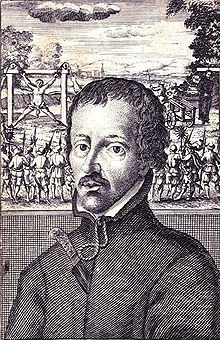
  • The Feast of St. Edmund Campion, SJ

    St. Edmund Campion’s feast day is today, December 1st. I remember first hearing about him in the novitiate as well as his amazing story. He was Anglican, somewhat of a celebrity in England and even an acquaintance of Queen Elizabeth. But as he continued his education at Oxford he began to realize that Catholic Church was the true Church, but to convert to Catholicism in England at that time was a dangerous venture. So eventually he snuck out of England and made for France, becoming Catholic and teaching at a Catholic university there where, ironically, he encountered some of his old Oxford buddies. After teaching for a few years he traveled on foot to Rome and was accepted into the Society of Jesus, teaching in Prague for several years. In 1580 a mission to England began, a secret and forbidden one that took volunteers only (since to be caught as a Catholic priest in England always resulted in considerable unpleasantries…) and he entered his homeland disguised as a jewel merchant. While there he sought out those people who still practiced their Catholic faith in secret and did all he could to try and help England remember its true faith. But in the end a spy ratted him out and he was captured. During the time when several public disputations were held, at which his opponents tried to discredit him,  he was never allowed to sleep or prepare his defense in any way, yet day in and day out he defended himself admirably and skillfully, winning the public’s hearts and minds. He was accused of treason, and the accompanying trial was conducted entirely out of the public’s eye and when the guilty verdict was read he responded, “In condemning us, you condemn all your own ancestors, all our ancient bishops and kings, all that was once the glory of England — the island of saints, and the most devoted child of the See of Peter.”

    His sentence was thus: “You must go to the place from whence you came, there to remain until ye shall be drawn through the open city of London upon hurdles to the place of execution, and there be hanged and let down alive, and your privy parts cut off, and your entrails taken out and burnt in your sight; then your heads to be cut off and your bodies divided into four parts, to be disposed of at Her Majesty’s pleasure. And God have mercy on your souls.”

    What did he say to that? Nothing; instead he burst into song, singing the Te Deum. Here are the English words to what would have been sung in Latin:

    We praise thee, O God :
        we acknowledge thee to be the Lord.
    All the earth doth worship thee :
        the Father everlasting.
    To thee all Angels cry aloud :
        the Heavens, and all the Powers therein.
    To thee Cherubim and Seraphim :
        continually do cry,
    Holy, Holy, Holy :
        Lord God of Sabaoth;
    Heaven and earth are full of the Majesty :
        of thy glory.
    The glorious company of the Apostles : praise thee.
    The goodly fellowship of the Prophets : praise thee.
    The noble army of Martyrs : praise thee.
    The holy Church throughout all the world :
        doth acknowledge thee;
    The Father : of an infinite Majesty;
    Thine honourable, true : and only Son;
    Also the Holy Ghost : the Comforter.
    Thou art the King of Glory : O Christ.
    Thou art the everlasting Son : of the Father.
    When thou tookest upon thee to deliver man :
        thou didst not abhor the Virgin’s womb.
    When thou hadst overcome the sharpness of death :
        thou didst open the Kingdom of Heaven to all believers.
    Thou sittest at the right hand of God : in the glory of the Father.
    We believe that thou shalt come : to be our Judge.
    We therefore pray thee, help thy servants :
        whom thou hast redeemed with thy precious blood.
    Make them to be numbered with thy Saints : in glory everlasting.


    At the age of 41 Edmund Campion was publically hung, drawn and quartered along with two other priests, on December 1st, 1581.

    During the time of his mission in England a famous publication was circulated all over the place, in one case copies being placed in the seats at Oxford during a prestigious event, and the students went nuts with it. The tale is told that his “Challenge to the Privy Council,” known more famously as “Campion’s Brag,” was written so that, in the event of his capture, the true reasons for his sneaking into England would be known so that charges of spying, treason or any other action against the Crown would be unjustified. Not that it helped him any, but it really captures the passion this man had for Jesus Christ, for His Church, and for his country.

    “To the Right Honourable, the Lords of Her Majesty’s Privy Council:

    Whereas I have come out of Germany and Bohemia, being sent by my superiors, and adventured myself into this noble realm, my dear country, for the glory of God and benefit of souls, I thought it like enough that, in this busy, watchful, and suspicious world, I should either sooner or later be intercepted and stopped of my course.

    Wherefore, providing for all events, and uncertain what may become of me, when God shall haply deliver my body into durance, I supposed it needful to put this in writing in a readiness, desiring your good lordships to give it your reading, for to know my cause. This doing, I trust I shall ease you of some labour. For that which otherwise you must have sought for by practice of wit, I do now lay into your hands by plain confession. And to the intent that the whole matter may be conceived in order, and so the better both understood and remembered, I make thereof these nine points or articles, directly, truly and resolutely opening my full enterprise and purpose.

    i. I confess that I am (albeit unworthy) a priest of the Catholic Church, and through the great mercy of God vowed now these eight years into the religion [religious order] of the Society of Jesus. Hereby I have taken upon me a special kind of warfare under the banner of obedience, and also resigned all my interest or possibility of wealth, honour, pleasure, and other worldly felicity.

    ii. At the voice of our General, which is to me a warrant from heaven and oracle of Christ, I took my voyage from Prague to Rome (where our General Father is always resident) and from Rome to England, as I might and would have done joyously into any part of Christendom or Heatheness, had I been thereto assigned.

    iii. My charge is, of free cost to preach the Gospel, to minister the Sacraments, to instruct the simple, to reform sinners, to confute errors—in brief, to cry alarm spiritual against foul vice and proud ignorance, wherewith many of my dear countrymen are abused.

    iv. I never had mind, and am strictly forbidden by our Father that sent me, to deal in any respect with matter of state or policy of this realm, as things which appertain not to my vocation, and from which I gladly restrain and sequester my thoughts.

    v. I do ask, to the glory of God, with all humility, and under your correction, three sorts of indifferent and quiet audiences: the first, before your Honours, wherein I will discourse of religion, so far as it toucheth the common weal and your nobilities: the second, whereof I make more account, before the Doctors and Masters and chosen men of both universities, wherein I undertake to avow the faith of our Catholic Church by proofs innumerable—Scriptures, councils, Fathers, history, natural and moral reasons: the third, before the lawyers, spiritual and temporal, wherein I will justify the said faith by the common wisdom of the laws standing yet in force and practice.

    vi. I would be loath to speak anything that might sound of any insolent brag or challenge, especially being now as a dead man to this world and willing to put my head under every man’s foot, and to kiss the ground they tread upon. Yet I have such courage in avouching the majesty of Jesus my King, and such affiance in his gracious favour, and such assurance in my quarrel, and my evidence so impregnable, and because I know perfectly that no one Protestant, nor all the Protestants living, nor any sect of our adversaries (howsoever they face men down in pulpits, and overrule us in their kingdom of grammarians and unlearned ears) can maintain their doctrine in disputation. I am to sue most humbly and instantly for combat with all and every of them, and the most principal that may be found: protesting that in this trial the better furnished they come, the better welcome they shall be.

    vii. And because it hath pleased God to enrich the Queen my Sovereign Lady with notable gifts of nature, learning, and princely education, I do verily trust that if her Highness would vouchsafe her royal person and good attention to such a conference as, in the second part of my fifth article I have motioned, or to a few sermons, which in her or your hearing I am to utter such manifest and fair light by good method and plain dealing may be cast upon these controversies, that possibly her zeal of truth and love of her people shall incline her noble Grace to disfavour some proceedings hurtful to the realm, and procure towards us oppressed more equity.

    viii. Moreover I doubt not but you, her Highness’ Council, being of such wisdom and discreet in cases most important, when you shall have heard these questions of religion opened faithfully, which many times by our adversaries are huddled up and confounded, will see upon what substantial grounds our Catholic Faith is builded, how feeble that side is which by sway of the time prevaileth against us, and so at last for your own souls, and for many thousand souls that depend upon your government, will discountenance error when it is bewrayed [revealed], and hearken to those who would spend the best blood in their bodies for your salvation. Many innocent hands are lifted up to heaven for you daily by those English students, whose posterity shall never die, which beyond seas, gathering virtue and sufficient knowledge for the purpose, are determined never to give you over, but either to win you heaven, or to die upon your pikes. And touching our Society, be it known to you that we have made a league—all the Jesuits in the world, whose succession and multitude must overreach all the practice of England—cheerfully to carry the cross you shall lay upon us, and never to despair your recovery, while we have a man left to enjoy your Tyburn, or to be racked with your torments, or consumed with your prisons. The expense is reckoned, the enterprise is begun; it is of God; it cannot be withstood. So the faith was planted: So it must be restored.

    ix. If these my offers be refused, and my endeavours can take no place, and I, having run thousands of miles to do you good, shall be rewarded with rigour. I have no more to say but to recommend your case and mine to Almighty God, the Searcher of Hearts, who send us his grace, and see us at accord before the day of payment, to the end we may at last be friends in heaven, when all injuries shall be forgotten.”


    St. Edmund Campion, pray for us!

  • The First Principle and Foundation

    It seems like there wasn’t a great deal of interest regarding baptism! But that’s OK; this blog isn’t about me! If anyone does end up wanting to know more about Catholic thought regarding baptism, please feel free to message me.

    Here’s a more basic post that I hope will be more helpful or at least more interesting.

    St. Ignatius of Loyola, besides being famous for founding the Society of Jesus (a.k.a. the Jesuits) is also well-known for a great gift to the spiritual life of the Church: the Spiritual Exercises. The basic goal of the Exercises is, in his own words, is that “…just as taking a walk, journeying on foot, and running are bodily exercises, so we call Spiritual Exercises every way of preparing and disposing the soul to rid itself of all inordinate attachments, and, after their removal, of seeking and finding the will of God in the disposition of our life for the salvation of our soul.” In other words, the Exercises seeks to help a person better know, love and follow Jesus, helping them to make Him the primary goal of their life, to let their desire to love and serve Him be the inspiration and end of every choice they make. There are many ways of making the Exercises, be it over the course of a year, an 8-day retreat or, as it was intended originally, a 30-day silent retreat (yeah, it’s awesome). 

    The text of the Exercises itself is not meant to be read and pondered but rather it serves as a guide for one giving the retreat as a director. It is basically St. Ignatius’s notes on how to give the retreat to someone and various things to keep in mind. But, as with anything written by a saint, it is full of gems.

    In this post I wanted to offer a short bit that utterly changed my life. I’ve already posted in the past what it taught me (or, in hindsight, began to teach me), so I offer it to you now in the hope that it will be something worth pondering. The following is meant to be the underlying principle upon which the rest of the Exercises is built, the grounding and starting point of the whole thing.


    23. THE FIRST PRINCIPLE AND FOUNDATION

    Man is created to praise, reverence and serve God our Lord, and by this means to save his soul.

    The other things on the face of the earth are created for man to help him in attaining the end for which he is created.

    Hence, man is to make use of them in as far as they help him in attainment of his end, and he must rid himself of them in as far as they prove a hindrance to him.

    Therefore, we must make ourselves indifferent to all created things, as far as we are allowed free choice and are not under any prohibition. Consequently, as far as we are concerned, we should not prefer health to sickness, riches to poverty, honor to dishonor, a long life to a short life. The same holds for all other things. 

    Our one desire and choice should be what is more conducive to the end for which we are created.


    Hopefully you can see what a profound statement this makes! For example, if our created purpose is to praise, reverence and serve God, how does that affect the way you are living your life right now? What are things in your life that are hindering you from fulfilling your created purpose, and what things can help you? What things in your life grant you the freedom to live your created purpose, and which things bind or imprison you?

  • The Sacrament of Baptism, Part I: Getting Our Feet Wet

    I was born on September 29th, 1983 and one month and one day later I received the greatest gift I would ever receive, the gift from which every joy and blessing from that day forward would ultimately come.

    At the tender age of one month and one day I was received into the Body of Christ by the Sacrament of Baptism. Really, then, I was truly born on that day and for the past few years I’ve even treated October 30th as a sort of “second birthday.”

    Much to my great dismay, however, there are so many of my Christian brothers and sisters who do not see the baptism of an infant as a valid baptism; in other words they believe that over one billion Christians in the world including myself, the vice-president of the United States, Lady Gaga, the Pope, Jim Caviezel, Melinda Gates, Liam Neeson, Stephen Colbert, Regis Philbin, Tom Brady, Brett Favre, Kobe Bryant, and so many others both known and unknown (regardless of whether they are good Christians or not…). And that is just the living; they would also dispute the baptism of Mother Theresa, Pope John Paul II, Archbishop Fulton Sheen, Alfred Hitchcock, Babe Ruth, Frank Sinatra, Martin Luther (yep!), Gregory Peck, Graham Greene, Caravaggio, Michaelangelo and my goodness the list goes on… Granted, their belief against the baptizing of infants likely doesn’t intend to dispute the baptism of so many but when you dispute the legitimacy of infant baptism, that is the logical result. 

    But the baptism of infants has been going on since the very beginning, perhaps even the same day when Jesus gave that great commission to “Go, therefore, and make disciples of all nations, baptizing them in the name of the Father, and of the Son, and of the Holy Spirit” (Matthew 28:19)! From the very first sending, from His first command to all His followers after He had risen from the dead, we see that baptism is something very important. We hear the word “baptism” and we think of water, and some of us think of babies, little white garments, candles and in some places sea shells (sometimes used to pour water over an infant’s head) but so often we stop there, never really wondering, “What is baptism?” 

    A Baptism by Any Other Name is Just as Wet

    From the Catechism: 

    “This sacrament is called Baptism, after the central rite by which it is carried out: to baptize (Greek baptizein) means to “plunge” or “immerse”; the “plunge” into the water symbolizes the catechumen’s burial into Christ’s death, from which he rises up by resurrection with him, as “a new creature.” (2 Corinthians 5:17; Galatians 6:15; Cf. Romans 6:34; Colossians 2:12)

    St. Gregory of Nazianzus has a much more elaborate way of describing what Christians call the sacrament:

    “Baptism is God’s most beautiful and magnificent gift. …We call it gift, grace, anointing, enlightenment, garment of immortality, bath of rebirth, seal, and most precious gift. It is called gift because it is conferred on those who bring nothing of their own; grace since it is given even to the guilty; Baptism because sin is buried in the water; anointing for it is priestly and royal as are those who are anointed; enlightenment because it radiates light; clothing since it veils our shame; bath because it washes; and seal as it is our guard and the sign of God’s Lordship.”

    Given baptism’s intimate connection with water, as we all recall from reading about Christ’s own baptism in the Jordan for example, I likely don’t need to go into explaining that. But what I may need to attempt to clarify a bit is why the Catholic Church recognizes Baptism as a Sacrament in the first place since, sadly, many denominations teach otherwise.

    In paragraph 774 of the Catechism the Church talks about “sacrament” as it relates to the Church itself, saying:

    “The Greek word mysterion was translated into Latin by two terms: mysterium and sacramentum. In later usage the term sacramentum emphasizes the visible sign of the hidden reality of salvation which was indicated by the term mysterium. In this sense, Christ himself is the mystery of salvation: “For there is no other mystery of God, except Christ.” (St. Augustine) The saving work of his holy and sanctifying humanity is the sacrament of salvation, which is revealed and active in the Church’s sacraments (which the Eastern Churches also call “the holy mysteries”). The seven sacraments are the signs and instruments by which the Holy Spirit spreads the grace of Christ the head throughout the Church which is his Body. The Church, then, both contains and communicates the invisible grace she signifies. It is in this analogical sense, that the Church is called a “sacrament.”"

    The Latin word sacramentum, from which we get the word “sacrament,” means “oath” or “promise.” In each sacrament we have a visible, tangible, and otherwise sensibly perceptible signs that help us to know not only by faith but with our whole person. The Sacraments, like Christ, were never meant to be invisible things that you just have to believe in but Christ instituted all seven in such a way that He connected them with material things, with rituals, with certain prayers and actions, just as the Son of God took on the flesh-and-blood of humanity so that we would know that He was present with us. Yes, there is a dimension of faith involved with Sacraments, just as with the Incarnate Word; after all, not everyone who met Him believed Him to be who He or anyone else claimed! We see the same with the Sacraments; not every Christian (or Catholic, for that matter) believes that the waters of Baptism do anything, that the “bread” and “wine” of the Eucharist are anything other than what they appear to be, that a newly married couple are joined as one until death parts them, that Confirmation does anything whatsoever, etc. Yet by the gift of faith we can believe Christ’s promise that the bread and wine are His Body and Blood, that the waters of Baptism do indeed cleanse us of our sin and prepare us for life as a member of Christ’s Body or, as the Catechism articulates it, “by the action of Christ and the power of the Holy Spirit [the sacraments] make present efficaciously the grace that they signify” (1084). In other words, by Christ’s action and the Spirit’s power the sacraments truly make present the grace they symbolize. Baptism seems to symbolize a cleansing and a washing and it actually does cleanse and wash in a way far beyond what mere water does; Eucharist seems to symbolize food and drink and actually is, granting not merely the prolongation of our earthly life but strengthening us for ETERNAL life (John 6:54), and so on with all seven. Christ has promised; the Holy Spirit delivers.

    Why is Baptism considered a Sacrament, then, and not merely a symbolic ritual or a public action testifying to a person’s death to the world and rising in Christ? Christ Himself tells Nicodemus that “…I say to you, no one can enter the kingdom of God without being born of water and Spirit” (John 3:5) and after His rising He teaches His Apostles that, “Whoever believes and is baptized will be saved; whoever does not believe will be condemned” (Mark 16:16). Baptism was meant to be a means of salvation; to receive baptism was absolutely crucial. In several places both Jesus and John the Baptist talk about the differences between the baptisms they offer; John’s baptism was one of water and personal repentance; Christ’s was one of Spirit and fire and the forgiveness of sins (Luke 3:16, Acts 2:38). Yet even Jesus baptized people with water (John 3:22) and taught His followers to do likewise (Acts 8:36-39); He has taken this ritual bath of the Law and fulfilled it, sending the Holy Spirit like a burning flame to truly purify the inside of the person as the water purifies the outside. Jesus commands His Church to go and baptize; He baptized, His followers baptized, and even He Himself humbly accepted baptism. He entrusts this ministry of baptism, this promise of His saving grace, to the Church, to each of His followers, for the salvation of all mankind; baptism is intended to be like a Flood that destroys the old humanity and leaves the new humanity in its wake, or the Red Sea through which we pass to escape death, or the Jordan through which we cross into the Promised Land. If it were merely symbolic, why would He Himself teach that it is so crucial for salvation? 

    Tying this back to the aforementioned issue of infant baptism, the sacrament is not a matter of being able to understand it or for the person to even ask for it; it is a grace, and an extravagant one at that! It’s purpose, really (as will hopefully be discussed in a future post), is to undo the effects of the Fall so that, by one’s life in the Church, one can enter anew into relationship with God as we were always meant to be. If it is offered to undo the curse, death and disobedience previously chosen by our first parents (Adam and Eve) for which we yet suffer, could not our current parents choose rather blessing, life and obedience for their child? Baptism is re-birth, and just like birth it is a free grace; if you are human and have not been baptized before, you may receive this Sacrament and enter into the life God intended for all of us, all along.


    This post in particular was only meant to lay some basic groundwork and to “stir the pot” for the next posts on Baptism. While my last post about Seven Things You Didn’t Know About Me was enjoyable and popular, I think it distracted a little from the question at the end of my post on the Trinity, which simply asked:


    “What are your questions/thoughts regarding baptism?”


    There is so much that can be posted about the Sacrament, so I think it would be best to try and limit future posting to what primarily interests/concerns you. Question away!

  • Tag; I’m It.

    Until I do my post about the Sacrament of Baptism, I was tagged yesterday by @QuantumStorm to post a list of seven things people probably didn’t know about me. So, here goes!


    1. Up until I entered the Jesuits, Star Wars was my chief interest/hobby.

    Granted I still have the occasional occasion to indulge in my old interest, but not nearly to the level I used to. The picture is from two years ago when the local symphony was doing the music of John Williams and a few members of the 501st Legion were present. Last weekend at Discovery World was Star Wars Day and not only were there Clone Troopers, Mandalorians and Clone Troopers present, but R2-D2 was there as well. I also tune in to Cartoon Network every Friday for a little dose of Star Wars fun.

    Before joining the Society, however, I would do Star Wars roleplaying adventures with my college friends, read Star Wars novels, play Star Wars video/computer games, etc. I don’t recall ever dressing up as a Star Wars character for Halloween or any other reason but had I the money and the means I think I would have joined the 501st or other fan group that dresses up for special events.

    Before college was the height of Star Wars-dom for me, though. Growing up outside a small town we had no internet and little access to malls, bookstores, comic shops, etc. To go to “the big city” was a rare treat. When I was in fifth grade two high school boys babysat my siblings and I and introduced us to the Star Wars Roleplaying Game (the old-school West End Games version). When I was old enough to do the babysitting my brother and I decided that it would be fun to start our own roleplaying game. So we cannibalized every board game in the house for dice and pooled together what then was our meager collective knowledge of Star Wars. We watched the classic trilogy over and over and over and I took copious notes of everything. I dove headfirst into the Star Wars Customizable Card Game and learned even more. I read every book I could. Over the next decade my brother and I (mostly me) developed a massive and very comprehensive Star Wars roleplaying game that started out just being handwritten rules and notes on scratch paper and became typed up and three-ring binder-bound rules with a sense of order about them. I had stats on over 200 starfighters, shuttles and transports (basically everything around the size of a Medium-transport on down) and well over 100 ships the size of a Corellian Corvette on up. This is just for starships; I had stats on weapons, equipment, creatures, alien species, everything. 

    We would have epic roleplaying parties with our circle of friends two or even three times a year where we’d roleplay the whole time, eating Tostitos and other junk and guzzling a whole refrigerator full of pop. As the adventure progressed (we played the same characters, the same adventure for over ten years) it grew to include elements from the Starcraft computer games, Aliens, Independence Day, the Homeworld computer games, and toward the end I even permitted a sprinkling of Star Trek. 

    I even drew up this map of the Star Wars galaxy as we had, over time, created it to be:

    Here you can see a close-up of the Core Systems, including Coruscant near the middle.

    But, as everyone got into college and “grew up” the possibility of getting the whole crew together for even one day of roleplaying became impossible, and so the adventure had to end about five years ago or so. And since then I just haven’t found the recent Star Wars novels as appealing as I used to (I probably spoiled my tastes by finally reading Tolkien; it’s hard to step down from that!) and the Star Wars movies don’t have the same appeal as they used to, either. I still enjoy watching them maybe once a year or so, especially if I am sharing them with someone who has never seen them before.


    2. I only ever had one girlfriend.


    (Sorry for the quality but, lacking a scanner, I had to take a picture of a picture!) 

    Her name was Christina; all throughout high school I was rejected by every girl I ever fell for. Finally, at the age of 19 and having a year of college under my belt, someone fell for me. We were together for a year and a half before she broke up with me. I sometimes wonder where she is now and how she is doing, and I pray for her.

    Sometimes I leave comments on Xanga about relationships, love, etc. and people instantly snap back, “What the hell do you know? You are just come sexless blah blah blah…” Well, now you know that I at least do have SOME idea of what I am talking about!

    That and now you’ve seen me in a zoot suit!


    3. I wanted to be an archaeologist.

    When I graduated high school in 2002 I went to the University of Wyoming to study archaeology. For years my dad and I hunted arrowheads in Iowa and even in the Red Desert north and south of Rawlins, Wyoming. We’d go out to the middle of nowhere, out where there is no sign of civilization as far as you can see except for the two-track road that brought us there, and that was probably made several decades ago by sheep herders. No one out with us save for the occasional pronghorn antelope or, if you were lucky, a beautiful, powerful, majestic wild horse. I miss that area sorely, and I don’t know if I’ll ever make it back there again. 

    I also LOVED U-Dub, as we affectionately called it. I made awesome friends there and had tons of fun; lots of roleplaying and sundry nerdy things. It was also the place (well, down the street at the Newman Center) that I really began to care about my Catholic faith which, as you can probably guess, set me on the course of the rest of my life. It’s just a terrific place to go to school.


    4. I’ve seen a UFO.

    When I was in third grade I woke up in the middle of the night. It was fall so there were no leaves on the trees and the night was clear. The moon was straight up in the sky (moon-noon I suppose!) but I don’t know what time it was. My brother was sleeping on a trundle-bed on the floor.

    Looking out the window to the west of the house I saw this big yellow ball just floating partly behind one of the trees. In the center the ball was a sort of orange color and there were three black lines streaking from it through the yellow part. It just sat there and I was terrified. Then it began to shrink and suddenly it was a small dot on the horizon, and then it would zoom back up to full size, and it did that several times. I just sat there unable to move and having no idea what the heck I was looking at. Were I thinking I’d have woken my brother so there would be another witness but, being the stupid third grader I was, I just stared. Finally I ran to my parents’ room and told them what I had seen. Dad came in quickly but OF COURSE there was nothing there any more.

    I remember the next morning we were all having breakfast before going to Mass and I heard my dad talking to my mom in the kitchen. She asked why I had come into their room last night and dad said, “Jacob said he saw something in the sky, but I didn’t see anything. He was really afraid of something, though, so I don’t think he was making it up.”

    Spooky, huh?


    5. Among many kinds of music I enjoy, symphonic power metal is among them.

    What?!

    Yeah, unexpected I imagine! Granted, it isn’t a huge percentage of music in my ITunes, but there is a smattering of some select songs, such as:

    or

    This is a very recent development, too; one of my scholastic brothers last school year introduced me to the genre. I really enjoy the “epic” scale of some of the songs, but moreso the storytelling quality, at least of the tunes I have picked out for my listening pleasure. I’m pretty picky when choosing metal songs that I enjoy but I thought it would definitely qualify as something y’all didn’t know about me! So if it is a metal song with good instrumentation, singing and lyrics (and isn’t loud, screaming, growling, etc.) then I may at least give it a shot!

    I mainly prefer film score music, big band/swing, folk, Irish/Celtic, classic rock, and music along those lines.


    6. I used to collect swords.

    Yes indeed! In high school I was fascinated with knighthood, chivalry, and Arthurian legend. I purchased my first sword at a gun show for $40.

    I eventually gave it to my girlfriend, as she collected swords, too. I lost it in “the divorce” haha. I also had a Confederate Cavalry Sabre (reenactment quality, so, very sturdy) which I gave to a college friend before I became a Jesuit, an Excalibur sword I purchased in Scotland:

    I ended up giving it to my friend formerly-known-as-maje_charis here on Xanga, before I became a Jesuit. And then last summer she entered a convent, and so I have it back! I don’t really know what to do with it now, so I am hoping one of my siblings will hurry up and have a really nerdy kid I can give it to someday. 

    A cheapo katana that was really the only sword I used (since it was so cheap and I didn’t care if it broke). It was my constant traveling companion when I would go out in the woods, whether I used it as a machete or just to make myself feel knightly or adventurous. I think I gave that to an old high school buddy who just wanted a sword to hang on his wall as well as something to remember me by, something so “me” that he’d never forget who it belonged to. Having taken my own oaths of chivalry as a high school freshman, it was something that everyone who knew me knew me for. I suppose one can be remembered for worse! I also had a massive, solid, hand-crafted Scottish claymore that my mother secretly purchased me while we were in Scotland and then gave me for Christmas. It had a straight crossbar like the one seen in Braveheart but varied in every other respect. Being an actual, true, real sword and not a “wall-hanger” as many swords out there are, I could easily have bashed a car to bits with it. But I loved it too much, so I was careful with it, giving it away to my best friend from high school before I became a Jesuit. Lastly I owned a United Cutlery produced Glamdring, the sword of Gandalf from The Lord of the Rings:

    I had a college buddy in Wyoming who needed cash and sold it to me for $100. Shyeah! I gave it to another high school friend before I entered. So, now, besides the “sword of truth” I suppose, I no longer have any swords save for the one that was returned to me.


    7. I’ve been to Space Camp


    When I was in sixth grade the local news station held a contest: for every A paper a person turned in they could enter a drawing for an all-expense paid trip to Space Camp. I wasn’t going to do it, even though I was obsessed with the space program (I would write NASA letters all the time with questions about outer space, and some nice person out there would send me back a short letter along with all sorts of pictures and documents with answers to my questions). My social studies teacher encouraged me to do it any way and helped keep track of any A papers I gave her: 14 in all. I ended up being drawn and when I finally met the other four students from Eastern Iowa who also had won I heard the two boys talking:

    “How many papers did you turn in? I had 54.”

    “83; I figured that would be enough.”

    ?!

    And I thought 14 was a big number…

    Space Camp was an absolute blast. I was the oldest kid in my group, and I still remember my best friend there was a kid from Missouri named Beau McDill. At the end of the week there was a big assembly and after some talks and such they presented the one award that they gave out: the Outstanding Trainee Award.

    Yeah, I got it.


    So there you go; seven things you likely didn’t know about me!

  • The Trinity

    What a hiatus! The latter half of September and October so far has been full; goodness I can hardly believe it’s been over a month since my last update. I have been meaning to update for the last couple of weeks but, alas, the mission always comes first and I wasn’t missioned to blog as my full-time apostolate!

    So my hope for this particular entry is not to slam-dunk the case for the Trinity but rather to offer some thoughts and ideas for understanding and talking about the Trinity (prepare yourself for a whole handful of nutshells!). To the dismay of some the Christian doctrine of the Trinity is not explicitly Biblical (as in the word “trinity” does not appear in the Scriptures, nor is the doctrine outlined or defined). The history of the doctrine’s development out of Apostolic Tradition (in other words what Christ taught His Apostles and they taught the first Christians, who taught the second generation, and so on until today) and Scripture is fascinating and, frankly, far to great in its scope for something like this blog! Nevertheless it is an absolutely crucial doctrine in Christianity; after all, Jesus’ commission to “go and baptize all nations in the name of the Father, the Son and the Holy Spirit” hardly makes sense if we yet claim to be monotheists! Yet we are. However some say, “Well you sound polytheist to me!” But we aren’t. We believe in one God in three Persons and vice-versa.

    Three in One? One in Three? Does…not…compute…

    Trinity? What It That, er, Who Is That? Er…Who Is?

    “Trinity” is a word that basically means “threeness,” which refers to God’s nature; the Trinity is the mystery of who God is. Hence, it ought to be extremely impossible to understand fully! But the fact that we even have a slight grasp that He is Three-in-One is an amazing grace and revelation. So, just as “unity” and “duality” mean “oneness” and “twoness,” “trinity” means “threeness;” three-as-one. You might also look at the word “trinity” the same way we look at the word “humanity” or “divinity;” the word “trinity” is speaking not merely of God’s numerical properties but of His very nature, His “threeness” just like “humanity” is speaking of our “human-ness.” Humanity is enough of a mystery to try and comprehend, yet here we are talking about Trinity. Are we not the most blessed people in the world?!?

    Some Scripture

    Besides the Great Commission at the end of Matthew’s Gospel, there are some other Scripture sources that at least begin pointing in the direction of a doctrine like the Trinity. My absolute favorite is Genesis 1:26 not only because it is beautiful but an important little word is so often glossed over:

    “Then God said: Let us make- human beings in our image, after our likeness. Let them have dominion over the fish of the sea, the birds of the air, the tame animals, all the wild animals, and all the creatures that crawl on the earth.”

    Literally in the beginning we see God speaking in the plural; I can’t even think of another time in which He does this.

    John 10:30 is probably about the most frank line of Scripture regarding at least a duality in God (since the Holy Spirit isn’t directly mentioned here:

    “The Father and I are one.” (Note the PERIOD at the end of that sentence!)

    John 17 is referred to in some Bibles as “The Prayer of Jesus.” In it He says things like, “Now glorify me, Father, with you, with the glory that I had with you before the world began” (17:5),

    “…everything of mine is yours and everything of yours is mine…” (17:10),

    “Holy Father, keep them in your name that you have given me, so that they may be one just as we are” (17:11b), 

    “I pray not only for them, but also for those who will believe in me through their word, so that they may all be one, as you, Father, are in me and I in you, that they also may be in us, that the world may believe that you sent me. And I have given them the glory you gave me, so that they may be one, as we are one, I in them and you in me, that they may be brought to perfection as one, that the world may know that you sent me, and that you loved them even as you loved me” (17:20-23).

    If by these we can at least agree that, Scripturally, Christ and God are one (a duality) then we might be able to connect that with a verse like John 20:21-22 when Jesus says, ““Peace be with you. As the Father has sent me, so I send you.” And when he had said this, he breathed on them and said to them, “Receive the holy Spirit…” Just as the Father sent Jesus, Jesus sends the Apostles. When He says this, He breathes on them, telling them that they have just received the Holy Spirit in that very breath…

    We start to see, then, that while we pick up hints toward a three-ality in Scripture, especially in the Gospels, defining the Trinity (not inventing mind you!) took more than merely what was written; after all, not everything Jesus said and did was written down (John 20:30)! Yet we see in the writings and artwork of the first few centuries of Christianity that the Trinity was something crucial to their beliefs; the oldest existing work in which the word “trinity” is used with the meaning we are all discussing here comes from the 2nd-century, even though the doctrine wasn’t defined in its present form until sometime in or around the 4th century. If Christians were already believing that God was a Trinity of Persons all along, why did the Church feel the need to define it, to use its Christ-given authority to clear things up and declare what Christians believe?

    Heretics of course! But I won’t go into all that mess; there are plenty of books that do a better job than I could. Let’s just say that, in the end, the Church was guided by the Holy Spirit to yet again chart that almost impossible course, threading the needle not around but straight between two heresies: Arianism/Subordinationism (that there is one Person, the Father, and Jesus is a creatureor that there is a hierarchy of superiority in the Trinity, with the Father being the greatest) and Sabellianism/Modalism (that there is one Person who appears to us in three modes or, as one professor of mine put it, wears three masks according to his purpose). Granted, many of you theologians out there will roll your eyes at these very loose definitions, but I’m not here to write a treatise! Yet in our orthodox doctrine we have three distinct Persons just like Arianism but without any subordination, and we have the oneness and unity of Sabellianism without achieving it by saying there is just One Person. In a true Catholic fashion the Church had revealed to it the both/and rather than the either/or and, given what we find in the Apostolic Tradition as well as Scripture, our Doctrine on the Trinity fits whereas Arianism, Sabellianism and various other heretical -isms fail. So how do we even talk about something like this?

    It’s All About Love

    Richard of St. Victor, who lived and died in the 12th century, wrote among many things De Trinitatae and in it I believe he explains in beautiful, simple terms a few ways of talking about the Trinity. Being unable to find an online version of the text, I’ll try and summarize what I read back in the spring.

    One of the ways Richard demonstrates a Trinity in God is on the basis of what we know about love. Being that God is perfect, this means God is lacking in nothing; He has everything of everything. This would include love; He is love after all (1 John 4:8)! Were God a single Person, there would be no one for Him to love. Some people out there believe that’s why God created us; not quite! Because, you see, in order to love perfectly, God would have to be able to love someone like Himself, someone else capable of returning an equal love. While He does indeed love us (unto mind-blowing proportions) we can only return that love on a human level, not on the same level that God has given it. To use a crude analogy, we are certainly capable of loving a dog a great deal, but that dog can never, ever love us back in the same way that, say, our spouse or child could. To love perfectly a human being must love and be loved by someone like themselves: a fellow human being. If God is to be perfect, then, He must be able to love not merely another God, but someone identical and equally perfect to Himself. Hence, if God is truly Love and loving, there must be at least two identical persons in God; the Lover and the Beloved. Yet, Richard goes on to say, love is only truly perfected when it is shared with a third person. We see this mirrored in human love, too; when two people are engaged to marry, wouldn’t it be an absolute impossibility for them to keep that to themselves for very long? We see it most mirrored (incarnated, you might say!) in a marriage: we see a man and a woman who love each other, and that love leads to a third person–the child–and then we see the human family take form. In this fallen world, in our fallen nature, we also see the anguish of those couples who are unable to conceive; were the love between the two of them complete in and of itself, where does this anguish come from? (Note: PRAY for couples who have difficulty conceiving!)

    By this understanding of love (again, my meager attempt at summarizing what I read months ago) we can at least demonstrate that a Trinitarian God, rather than a Unitarian or Dual(itarian?) God is reasonable; seeing Two persons is fairly straightforward and seeing a Third is not that far off. It is in a community that love finds its perfection. Some might say, “Well, why stop at three?” I would say because of God’s perfection; three Persons is what is necessary and any beyond that suggest something still lacking in the previous Three. Remember, He’s perfect!


    St. Thomas Aquinas also had a way of talking about the Trinity, again relying upon the belief that God is perfect. He suggests that God the Father, in knowing Himself perfectly, “begets” the Son. Take a moment and imagine yourself. Picture yourself in your mind, as accurately as you can. You cannot do it perfectly; if you could do it perfectly–in that your knowledge of yourself would not be lacking in anything whatsoever–that very thought would come into real existence. God, however, is capable of knowing Himself perfectly! The Son is the personified, perfect knowledge of God’s self; this is also why the Son is referred to as the only-begotten as opposed to being created, since the Son is not created by God (like we are) but rather is of God, as we are of our parents and not created by them. Goodness, what a mess that would be! The Holy Spirit, then, is the love God the Father has for Himself as He knows Himself; the Holy Spirit is the love between the Father and the Son. Again, imagine yourself and, hopefully, you love that self that you know. Imagine if you could love yourself perfectly, as God can love Himself perfectly. God can love Himself perfectly, so perfectly that this love becomes a Person. In a nutshell (as though this wasn’t a nutshell already!) the Trinity is the Knower, the Known and the Knowing, or the Lover, the Beloved and the Love/Loving. St. Thomas also uses the language of the inner Word of God that is spoken on the breath of the Spirit; God’s thought of the Word and His speaking forth is all one, eternal action that never had a beginning and never had an end. All the members of the Trinity are co-eternal; there was never a time when they weren’t all three existing. After all, how could the Father be the Father without the Son and vice-versa, and would they not love each other?

    With both Richard and St. Thomas we see a Trinity of three identical persons; the only thing that makes them distinct from each other is their relationship. Everything else about them is completely identical; there is nothing present in one that is not present in the other. Isn’t it amazing, then, to realize that the only reason that the Son obeys the Father is not because the Father is any different, but because out of perfect love for the other Person the Son chooses to lower Himself? By the same the Father, out of love for the other, though He knows Himself not to be any different from Him, accepts the humility and self-lowering of a Person identical in every way to Himself? Can you even begin to imagine such a love?!?!?


    Finally I might add my own little thing here about why there is a Trinity as opposed to three Gods as some heretics preached, as some Muslims accuse Christians of believing and some Christians, unfortunately, believe.

    God is perfect, so if there are three God’s then you have three perfect Gods. If they are truly perfect–lacking in nothing whatsoever–then they are identical in every. single. way.

    Here’s a problem: if there are three separate persons–separate mind you–then they must occupy different “places” (yes, I know the difficulty of talking about “place” when we are also talking about immaterial beings!). 

    For example say there were three of me (I’ve chosen different pics of myself just to illustrate that even at different points in time, I was as much me as a toddler and a time-traveler as I am me as a Jesuit seminarian with my baby niece) :

    Even three identical clones of myself would still differ in their relation to one another, to their place. If they were perfect clones they would have everything in common; thus three perfect clones would occupy the same space at the same time. Three perfect immaterial beings would thus only differ in relation to one another, thus you couldn’t have anything less than a Trinity anyways. The only way to have three Gods is if at least two of them are somehow lesser or imperfect but, then, it hardly makes sense to have one perfect God and two imperfect ones, does it? And if only one is perfect, then we run into Richard’s whole thing about love…oh let’s just all be Christians, shall we?

    Now, why a post on the Trinity? Whoopee, so what; God is one-in-three; why is this relevant to me, Mr. Joe Christian? My goodness, it is the very heart of the matter! You see we are made in the image and likeness of this Trinitarian God; we are meant to be a part of this mystery. But how do we become a part of it? That’s the whole purpose of Christianity; that is why God spoke to Noah and all our fathers in the faith, that is why the Son became Man and lived, suffered and died for us, that is why during His ministry He instituted Seven Sacraments, this is why He sent us the Holy Spirit, this is why He left us teachers in His Apostles, this is why He founded His Church and entrusted it to those same men. He has done all of this so that we could be immersed in the waters of the Trinity, to live in the very love of the absolute heart of God.

    I hope to do my next post (or posts, as it may or may not happen) on the Sacrament of Baptism so, for those who bravely and very, very charitably read this whole post (and even those who just skipped to the baby pictures and saw this last sentence!), what questions do you have regarding the Sacrament of Baptism? Even if I cannot answer all of them it would at least give me an indication of what things I ought to try and address.

    God bless you all!

  • September 11th

    Ten years ago it was Tuesday and I was a senior in high school. I was in College Prep English class and someone said they heard that a plane flew into the World Trade Center. I thought surely it was due to bad weather and told them about a time decades ago when a bomber plane accidentally crashed into the Empire State Building; perhaps a similar accident occurred. Soon it was time to go to my choir lesson and as my lesson was finishing I mentioned hearing about the plane crash to my choir teacher, adding, “As cruel as it might sound, I think it would be pretty cool to see a jetliner crash into a building.” (I now know that it isn’t cool at all.)

    On my way back to class a student in the hall said, “Hey, did you hear that a plane just crashed into the World Trade Center?” “Yeah, I’ve known for like an hour.” “Wait, no, this one just happened a couple minutes ago.”

    What? Are you sure?”

    “Yeah, why?”

    I ran back to my choir teacher and as soon as I opened the door I saw him and the middle school band teacher standing by the radio with pale faces and mouths wide open. I ran back to my English class and threw open the door.

    “Turn on the TV!”

    We didn’t learn any English that day.

    ****

    Fast forward ten years; I’m an entirely different person, and I live in an entirely different world. Everything changed so fast. But not everything changed.

    Ten years ago it was Tuesday in the 24th Week of Ordinary Time, and here we are again in the 24th week. The readings at Daily Mass on that Tuesday were as follows (I think; I had to do some calculations!):

    The First Reading: 1 Timothy 3:1-13

    Beloved, this saying is trustworthy:
    whoever aspires to the office of bishop desires a noble task.
    Therefore, a bishop must be irreproachable,
    married only once, temperate, self-controlled,
    decent, hospitable, able to teach,
    not a drunkard, not aggressive, but gentle,
    not contentious, not a lover of money.
    He must manage his own household well,
    keeping his children under control with perfect dignity;
    for if a man does not know how to manage his own household,
    how can he take care of the Church of God?
    He should not be a recent convert,
    so that he may not become conceited
    and thus incur the Devil’s punishment.
    He must also have a good reputation among outsiders,
    so that he may not fall into disgrace, the Devil’s trap.

    Similarly, deacons must be dignified, not deceitful,
    not addicted to drink, not greedy for sordid gain,
    holding fast to the mystery of the faith with a clear conscience.
    Moreover, they should be tested first;
    then, if there is nothing against them,
    let them serve as deacons.
    Women, similarly, should be dignified, not slanderers,
    but temperate and faithful in everything.
    Deacons may be married only once
    and must manage their children and their households well.
    Thus those who serve well as deacons gain good standing
    and much confidence in their faith in Christ Jesus.

    (We see here some wise and holy guidelines for the kind of person a leader ought to be. Oh if we’d had such a “bishop” for our nation and “deacons,” too! But we were content for the most part, and everything seemed fine.)


    Responsorial Psalm: Psalm 101: 1b-2ab, 2cd-3ab, 5, 6

    R. I will walk with blameless heart.
    Of mercy and judgment I will sing;
    to you, O LORD, I will sing praise.
    I will persevere in the way of integrity;
    when will you come to me?
    R. I will walk with blameless heart.
    I will walk with blameless heart,
    within my house;
    I will not set before my eyes
    any base thing.
    R. I will walk with blameless heart.
    Whoever slanders his neighbor in secret,
    him will I destroy.
    The man of haughty eyes and puffed up heart
    I will not endure.
    R. I will walk with blameless heart.
    My eyes are upon the faithful of the land,
    that they may dwell with me.
    He who walks in the way of integrity
    shall be in my service.
    R. I will walk with blameless heart.

    (Goodness wasn’t this our attitude in those days? We could do no wrong. We were blameless in our house; we looked not on base things, we were not haughty…)

    The Gospel: Luke 7:11-17

    Jesus journeyed to a city called Nain,
    and his disciples and a large crowd accompanied him.
    As he drew near to the gate of the city,
    a man who had died was being carried out,
    the only son of his mother, and she was a widow.
    A large crowd from the city was with her.
    When the Lord saw her,
    he was moved with pity for her and said to her,
    “Do not weep.”
    He stepped forward and touched the coffin;
    at this the bearers halted,
    and he said, “Young man, I tell you, arise!”
    The dead man sat up and began to speak,
    and Jesus gave him to his mother.
    Fear seized them all, and they glorified God, exclaiming,
    “A great prophet has arisen in our midst,”
    and “God has visited his people.”
    This report about him spread through the whole of Judea
    and in all the surrounding region.

    (And Jesus journeyed to New York City, and his disciples and a large crowd accompanied him. As he drew near to the gate of the city, hundreds who had died were being carried out, the sons and daughters of many mothers and fathers, the spouses of many now made widows and widowers. A large crowd from the city came with them. When the Lord saw the crowd, he was moved with pity for them and said to them, “Do not weep.” He stepped forward and touched the ambulances and the stretchers, the ashes and the ruins; at this the bearers halted, and he said, “Men and women, I tell you, you are risen, and a day shall come when you shall walk with your mothers and fathers, your children, your spouses.” Fear seized the crowd, for they knew those words but could not at the time believe them, yet they turned to God amid the ash and smoke, exclaiming, “Oh that God was in our midst, that He would visit His people in this hour!” And news of what had happened spread through the whole of the country and in all the surrounding world.)


    While no one going to early morning Mass before work ever anticipated the preparation these readings would offer us that day, today’s readings, I think, absolutely strike to the heart in a way only God could have known. Yet these readings were chosen even then, even decades and maybe centuries ago, all part of the liturgical cycles of the Church, unchanging even in the midst of horrible human atrocities and devastation. While sitting in a beautiful basilica hearing these readings, I could not help but thank God; we all need to hear these words (though, sadly, because of canonical differences, many of my Christian brothers and sisters may never hear the first reading in their places of worship!).

    The First Reading: Sirach 27:30-28:7

    Wrath and anger are hateful things,
    yet the sinner hugs them tight.
    The vengeful will suffer the LORD’s vengeance,
    for he remembers their sins in detail.
    Forgive your neighbor’s injustice;
    then when you pray, your own sins will be forgiven.
    Could anyone nourish anger against another
    and expect healing from the LORD?
    Could anyone refuse mercy to another like himself,
    can he seek pardon for his own sins?
    If one who is but flesh cherishes wrath,
    who will forgive his sins?
    Remember your last days, set enmity aside;
    remember death and decay, and cease from sin!
    Think of the commandments, hate not your neighbor;
    remember the Most High’s covenant, and overlook faults.


    The Responsorial Psalm: Psalm 103:1-2, 3-4, 9-10, 11-12

    R. The Lord is kind and merciful, slow to anger, and rich in compassion.
    Bless the LORD, O my soul;
    and all my being, bless his holy name.
    Bless the LORD, O my soul,
    and forget not all his benefits.
    R. The Lord is kind and merciful, slow to anger, and rich in compassion.
    He pardons all your iniquities,
    heals all your ills.
    redeems your life from destruction,
    he crowns you with kindness and compassion.
    R. The Lord is kind and merciful, slow to anger, and rich in compassion.
    He will not always chide,
    nor does he keep his wrath forever.
    Not according to our sins does he deal with us,
    nor does he requite us according to our crimes.
    R. The Lord is kind and merciful, slow to anger, and rich in compassion.
    For as the heavens are high above the earth,
    so surpassing is his kindness toward those who fear him.
    As far as the east is from the west,
    so far has he put our transgressions from us.
    R. The Lord is kind and merciful, slow to anger, and rich in compassion.


    The Second Reading: Romans 14:7-9

    Brothers and sisters:
    None of us lives for oneself, and no one dies for oneself.
    For if we live, we live for the Lord,
    and if we die, we die for the Lord;
    so then, whether we live or die, we are the Lord’s.
    For this is why Christ died and came to life,
    that he might be Lord of both the dead and the living.


    The Gospel: Matthew 18:21-35

    Peter approached Jesus and asked him,
    “Lord, if my brother sins against me,
    how often must I forgive?
    As many as seven times?” 
    Jesus answered, “I say to you, not seven times but seventy-seven times. 
    That is why the kingdom of heaven may be likened to a king
    who decided to settle accounts with his servants. 
    When he began the accounting,
    a debtor was brought before him who owed him a huge amount. 
    Since he had no way of paying it back,
    his master ordered him to be sold,
    along with his wife, his children, and all his property,
    in payment of the debt. 
    At that, the servant fell down, did him homage, and said,
    ‘Be patient with me, and I will pay you back in full.’
    Moved with compassion the master of that servant
    let him go and forgave him the loan. 
    When that servant had left, he found one of his fellow servants
    who owed him a much smaller amount. 
    He seized him and started to choke him, demanding,
    ‘Pay back what you owe.’
    Falling to his knees, his fellow servant begged him,
    ‘Be patient with me, and I will pay you back.’
    But he refused. 
    Instead, he had the fellow servant put in prison
    until he paid back the debt. 
    Now when his fellow servants saw what had happened,
    they were deeply disturbed, and went to their master
    and reported the whole affair. 
    His master summoned him and said to him, ‘You wicked servant! 
    I forgave you your entire debt because you begged me to. 
    Should you not have had pity on your fellow servant,
    as I had pity on you?’
    Then in anger his master handed him over to the torturers
    until he should pay back the whole debt. 
    So will my heavenly Father do to you,
    unless each of you forgives your brother from your heart.”

    The Gospel of the Lord

    Praise to you, Lord Jesus Christ.