Uncategorized

  • A Quick Note

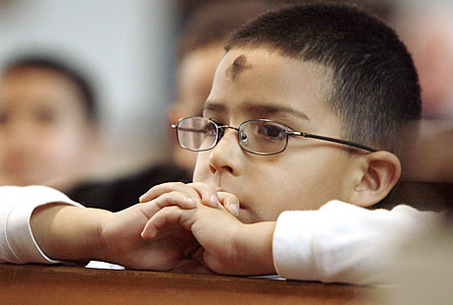
    Hello all! I was asked to maybe do a post on Ash Wednesday/Lent, and I was hoping to but by the time I get to it this week we’ll be well past the point of being relevant! However I found a couple of posts I did on the same subject last year and two years prior that I hope will be hopeful. God bless you all; I’m praying for you! And of course via my last pulse I’m still accepting prayer requests and will continue to do so throughout these forty days.

  • Té Teperedcé Kroné: The Debtor King, Part XI

    Dauabré stood trembling before the Golden Throne, feeling as though the sun was bearing all its fiery gaze upon her as not only Médash sat before her, but so too did Edhsél, Lílabhél and Bhélmal. The king said not a word but simply watched her. In his heart he knew then her beauty, saw the white light of the sun bathing her as it poured in through a high window, how it tinged the edges of her raven circlets of hair with silver and cast such shadows on her face that the color of her bright eyes burned like wind-thrilled embers. Yet his mind wrestled with doubt and shame: doubt because of her grand deception at playing a princess when she was as common as the sand from which she came and shame at how greatly impressed he had been with all he had seen of her when the veil of that deception was before his eyes, and how that shame only deepened now that all had been revealed.

                “My lord,” she dared to say, “will you hear my truth?”

                He said not a word either way, and so she dared further.

                “My lord, I came to you all those days ago that I might seek your pardon for calling you a horse-thief and believing you to be not a king. But thrice you denied me, sending me gold for my troubles. So compelled was I by my shame at dishonoring the king and so strong was my desire to seek your forgiveness that I took the gold you had given me and used it to purchase the fine raiment in which you came to receive me. I thought that were I not a peasant but rather a princess, you would hear me. Little did I know that you had received other princesses and were discerning which among them you would take to wife. All the while I sought but a moment to confess to you the truth, but such a moment was constantly denied. Truly did I test your every word and deed in my heart, my lord, to weigh you and judge whether you were a goodly man. By these things and the testimony of your people, my king, I did not find you wanting in any way, and in the light of this I feel as though a naked traitor worthy of death for my deception.”

                It was then that Lílabhél arose and begged leave to depart, to which the king inquired her reason. “Médash-King, my lord, my heart can take no more and I find that I yearn for the comfort of my homelands. I thank you, most deeply, for all your hospitality and for even bearing the sight of me in your great halls. I only hope that when you choose your bride, Majesty, that you consider me a future friend, for I wish to be half so great a queen as the woman you take to your side.” With a graceful bow and not another word Lílabhél walked silently away, and the king was puzzled, for in the way she spoke it was as though she already knew whom he would choose, though he knew not at all.

                Mustering his kingly resolve he spoke to the unveiled woman, “Tell me, then, what is your name? For it is not Dauabré and surely it is not Sulbhél as it was those days in the desert?”

                “One thousands pardons, my king; my name is Rodhél and naught else, for though my father indeed governs a vast portion of the desert and watches it vigilantly for all that might bring harm to your Majesty’s people his name is not of the kind that is heralded by trumpets; thus a common name for a common woman, the daughter of a common man.”

                “Very well,” spoke the king, “Rodhél, because of your conduct while here within my courts and the joy you have brought to my people I permit you to leave without punishment or any burden greater than that which you impose upon yourself. Keep all that you have been given, whether by myself or by my people, but return not again to this mountain.” Silence followed, and a single tear rolled down the face of Rodhél who, softly, asked the king’s leave to speak one last time, and so such leave was given.

                “Majesty, when it was that I stood in the fitting room of the cloth merchant being clothed in such splendid raiment as I had never before known, I had no intention whatsoever of considering a husband. I sought merely to parlay with you, and that is all. The veil that I wore in order to hide my common face brought not only anonymity but earned such graciousness from you as had never been shown me by another man before, and thus did my heart grow wary and joyful all at once. What’s more is that in spite of my commonality I yet found esteem among these high-born women who came to court you and I admit, my lord, that a part of me hoped perhaps the lowliness of your servant would be overlooked. I know now, however, that even were I chosen from among the spray of lilies that you gathered from the great kingdoms the truth would be discovered, and naught but a dandelion would you find in your hand, so common as to disgrace so great a king. I had planned and made provision, therefore, to depart on the morrow—the promised seventh day—but silently in the late watch of the night. I bear the Lady Edhsél no grudge for discovering me; it is God’s will that I be humbled for my pride.”

    Rodhél then bowed, acknowledging the Abharakéan princess, which caused the huntress such great pleasure that she permitted a bright, white smile to shine out. Secretly, however, she saw the humiliation and departure of her chief competitor for the king’s heart and felt her victory was assured. The king then stood solemnly, pointing west. He spoke.

    “Rodhél, I grant you leave to depart. Go in peace.”

    She said nothing, offering as graceful a bow as her quaking flesh could impart. When fully out of sight from the western window of his hall it was then that Bhélmal stood, lip trembling, and the king asked in alarm, “What troubles you, my lady?”

    The beauty-of-the-sea continued to look at the exit through which Rodhél had so recently passed as though looking afar off to a ship on the horizon, “My lord, so noble a woman I have not met, and such nobility I have not known; I am utterly ashamed.” Without asking for the king’s leave she departed hurriedly for her chambers and was on her way to her homeland by nightfall. Thus did King Médash find himself standing alone with no one but Edhsél in his company, and her heart swelled.

    “Majesty…I have no words to expressed how honored I am…”

    “For what?” he said of a sudden, cutting off her words as though with a sword.

    “That I am yet here, my lord, that I alone remain…that of the daughters of the snows, the seas, the forests and the deserts I am yet here to be your queen, if you will have me.” With this she stood mightily, and the sight of her was almost like a torch, for such was her confidence and pride. But Médash felt his heart sink, and thus too did he permit his whole self to sink back into his great throne, seeming now so cold and hard to him.

    “Edhsél you have not been chosen; you have been left.”

    What seemed an hour of agonizing quiet was but a few breaths in duration, yet during that time Edhsél had pondered each possible meaning of the king’s words; none made sense to her.

    “I do not understand; is this not what you desired, to have one of us remain for you to take to wife?”

    “Edhsél, for all your strength and pride you are yet easily wounded, so I beg you listen with understanding and patience for your lord. You would not have been my choice, and though I had hoped to have several days more to ponder the matter the answer has been made plain to me. In these past days you have competed for me as though I were a trophy of some kind, as though your noble sisters were competitors. Such a game was not my intention, for I did not expect to receive five princesses all at once. But eager were all of you to court me, for which I was flattered, but I see now how cruel it must have been for all of you to suffer the presence of one another when it was but my company alone that you desired.”

    “Do you not desire me, my lord? Am I not desirable?” At this she seemed somehow to grow in beauty, as though a spell were cast. His eyes however were not upon her, but rather looked at some unseen thing just beyond her.

    “You are desirable in many ways, noble Edhsél; in this I would not dare say otherwise lest I tell a lie. You are proud and you are boastful. You are cruel at times and crafty in ways that seek to have your desire done over the desires of others. You rejoice in the losses of others and flaunt your own victories. I have no doubt whatsoever that in your land such a queen as your like would be greatly sought for and praised, for the land of Abharakéa is treacherous and breeds hard folk for hard living. Here in my land, my house, a softer woman is needed. Thus, unlike your sisters who left of their own will, and unlike Rodhél whom I ordered away, I ask you kindly to depart and to take my good tidings to your father.”

    Edhsél’s face twisted into an expression of anger though she said not a word, her footfalls ringing in the empty hall like intermittent hail on flagstone. When she was gonhad departed the mountain e and the trumpets saluted her from atop the walls, Médash wept, for it was then that he was alone.


    The moon was eaten by the night a full time and birthed anew nearly twice when Médash awoke from his sleep, hearing a voice that spoke his name. Searching his bedchamber for the voice’s bearer he found naught but a white feather, and thus did he fall to his knees, saying aloud, “My God, why do you torment me so? I have not rested a full eve since the departure of your royal daughters; have I displeased you? Speak to me, Lord; I am no king but merely a child.”

    His sorrowing heart was startled nigh on to ceasing altogether when of a sudden a white dove fluttered and perched on the sill of his window. A thrill coursed through him as he remembered that fateful night when first he came upon Rodhél and all his happy life was upturned. Médash stared hard at the dove, straight into its small eyes black like little beetles that blinked innocently at him, and his heart began to weigh upon him as memories of Rodhél seeped in from all the strange and varied places he’d hid them. He remembered the sweetness of her singing while she gently spread salve upon his burns and how beautiful was her song on the day of the grand tournament. He recalled too how nobly she bore herself when disguised as Dauabré, how she sought always to please him in all she did, seeking never to impress him by her own skill. The people of the mountain still spoke of her, how it was that she saved Celereshél from certain doom at the horse race, and how she so patiently bore the scrutiny and competition of Edhsél. No memory wounded him so deep nor stuck so fast as the look of her eyes upon his very soul when she begged his forgiveness, when he dismissed her with hardly a word.

    At that the dove flew out over the sands, and the king ran to the sill where it was perched to see in what direction it advanced. Eyes brimming with tears as memory upon memory overwhelmed him, the sight of Médash was yet clear enough to see that the bird was flying in the same direction as before, to the west, and it was then that all mystery was shattered in the clarity of his thought. Thus again did Médash ride for the wastes, but this time he knew well the way.

  • Seven Things

    So @passionflwr86 tagged me for the Seven Things thing but I was in Wyoming at the time visiting family! So while I am way behind and everyone I’d have likely tagged has already been tagged by others, I’ll fire off seven random things you may not know about me anyways. It may not be as popular as the last time I did this, but here goes!


    And yes, in due time I will continue posting portions of The Debtor King; we are closing on the end!


    1. I only watch TV four times a week.

    If Fox had never cancelled Firefly, I’d watch TV five times a week.


    2. From birth until kindergarten, I had severe epilepsy.

    According to my mother, it is by the grace of God and the miraculous apparatus known as the defibrillator that I am here typing this now! I spent a great deal of time in hospitals as a wee child, though I have only two memories.

    One memory is watching the fireworks of Independence Day; I must have been three of four years old. I remember standing at the big window of my hospital room and then I turned around to ask my mom, “Mommy, why is the sky crying?”

    My other memory is lying on my hospital bed with an IV in both of my skinny little arms, Garfield bandages and cotton balls all over the place, watching some National Geographic special on gorillas with my mom.

    Not long before I started kindergarten I remember going to an appointment to see if I still had epilepsy; I apparently hadn’t had a seizure in a good long while (not that anyone was disappointed). I was going to have an EEG so they glued all these electrode things to my head (the glue smelled like nail polish) and then they said they wanted to give me something so I’d go to sleep. I said, “No, I can go to sleep by myself,” so I lay down, closed my eyes, and went to sleep to the amazement of all. They didn’t see anything out of the ordinary, and though no one was able to explain it, my epilepsy–as severe a case as it was–was totally gone and never, ever came back.


    3. In second grade I had a post-graduate reading level.

    I devoured books as a youngster, and in my elementary years I was already tackling adult-level (not adult-rated, mind you!) books like Jurassic Park and such. I didn’t think much of it at the time, but looking back I can see how my parents and teachers must have thought that was pretty neat. I’m glad, though, that it didn’t go to my head; it probably would not have been prudent to brag to the senior kids on my bus that I could read at a more advanced level than they could!


    4. I was in eighth grade when a movie first made me cry.

    I had already seen “The Last of the Mohicans” many, many times; it was my favorite movie and is still definitely in my Top Ten. But for some reason one day in eighth grade I was watching it after school, by myself, and the part shortly after Magua slays Uncas came up, there was a shift in my soul. I watched Alice Munro step toward the edge, I finally noticed the music, the soft rain that began to fall, the even softer thunder in the distance and the look on her face and then she leaps to her death to escape what was sure to be a far worse fate. I bawled like a baby! I didn’t understand it at all, but I bawled and I have no shame admitting it; that scene is so utterly tragic and beautiful at the same time.

    5. Top Five Influential Movies Ever.

    Let’s see if I can even do this! They follow in no particular order; I couldn’t even begin to order them according to preference. I know most people go for a Top Five Favorites or so, but I figured I’d give y’all something different.

    1. Braveheart: this movie had such an impact on me when I watched it. I saw a hero, finally, and though I understood that the movie romanticized the actual William Wallace almost to the point of being about a completely different person altogether, nevertheless I was deeply struck with the character and the whole movie. I loved the music, the scenery, but I think what stirred me most was that all his passion, his drive for everything he did, came from the love he not only had for his wife but continued to have for her, even after her death. At a time when I was feeling so alone, totally unworthy of love at all and overlooked by every woman I encountered, I still found myself inspired to hope that maybe, someday, I’d find my own Murron and perhaps even something worth fighting and dying for. Who knew that my Murron would be the Bride of Christ–the Church–and the Faith my cause? I certainly didn’t!

    This movie was so influential that in my senior year of high school, when my mother said that she would take me anywhere in the whole world for two weeks since I did so well in all twelve years of school, I choose to make a William Wallace pilgrimage. We flew to London two weeks after 9-11 (a very interesting time to fly but a blessed time to be an American abroad; I’ve never been treated so kindly by anyone simply for being from the USA) and then went to York (sacked by Wallace in the movie though I don’t know if it ever happened for real!) which was absolutely beautiful. The cathedral there is absolutely breath-taking! Then up to Edinburgh, Stirling (where the amazing Wallace Monument and Stirling Castle are both located!) and finally Loch Ness and Loch Lomond because–hello–we were in SCOTLAND!

    And since we were in Scotland, I got my kilt, which I still have.


    2. First Knight: At the time I was a hopeless romantic and loved anything related to King Arthur. What this movie did for me was to help me grow in something I needed desperately, though I didn’t know it: courage. I was in seventh grade, socially-awkward, shy and very rarely spoke up in class (at least I seem to remember being this way). If ever I had to speak in front of the class I was terrified. I saw myself as a total loser, had only a few friends who for the most part were social outcasts like me. Then I saw Lancelot, and though I was mad at him for screwing things up between Arthur and Guinevere, he taught me an important lesson, or so I thought.

    There is a scene shortly after Lancelot runs The Gauntlet successfully and Arthur asks him where he gets such courage. Lancelot says that he has nothing to lose–no land, money, home, family, etc.–and thus he has no fear. What I did catch was that Arthur said that a man with nothing to lose has nothing to live for, or something along those lines, but I was fixed on what Lancelot said because that is how I felt: I had nothing to lose, so what was I always so afraid of? Looking back I saw that I had so much: home, family, things and people I loved, few but true friends, talents, and so on. But what this did was embolden me to not be so afraid any more, and so my fear of speaking in front of the class, being a little more outgoing socially, not caring what others thought about how geeky I was and all else came about and by the time I graduated high school I was a completely different person. While my understanding of where my courage comes from has changed drastically, it all started with Lancelot’s somewhat sad explanation of the origin of his. But God can make marvelous things out of clay, don’t you think?


    3. The Original Star Wars Trilogy: I think I covered that well enough the first time I did this Seven Things thing!

     

    4. The Last of the Mohicans: I totally fell in love with this movie. I was never really a lover of listening to music until in the sixth grade when I “discovered” Beethoven and Aaron Copland’s “Appalachian Springs” in music class. In my search for beautiful music I stumbled on the cassette recording of this film’s soundtrack and so began a life-long love of film scores. Before I entered the Society of Jesus I had well over 300 CDs, over 250 of which were film scores. I gave about half of them away to various friends and the rest remain at my mom’s house.

    This film also awakened in me a love of nature and a desire to be adventurous. That movie still stirs my heart, and I can’t help but feel the urge to sling a rifle over my shoulders and just run full-tilt through a forest. When exploring the timbered areas along the creek east of the house I grew up in I always carried an old hatchet on my belt, and I even made a gunstock-style warclub like Chingachgook used in the movie. I high school my best friend and I thoroughly explored all the wooded areas around my house and went on many adventures, and all the while the soundtrack to this movie would play in my head. Some of my most beautiful memories of those years are of exploring those forests, but I’d have never had the urge to see what lay behind the curtain of trees in the distance had I not seen this movie. To this day I love this music, this movie, and exploring new forested areas when I have a chance.

    5. Dragonheart: Yep, and I only ever saw it one time! But the character of Bowen resonated deeply with me. He was looked upon as old-fashioned, out-dated and pretty much useless by everyone simply because he felt strong and true to the Knight’s Code and lived faithfully, courageously and authentically by it. I felt like him; I was somewhat old-fashioned my own self, especially when it came to ideas about how one ought to treat/respect women, ideas about sexuality (waiting until marriage, etc.), respecting teachers, holding doors open for people, and all manner of other things. Even up into my senior year of high school I had very few guy friends (though my this time the guys in my class had ceased ridiculing me for never having “scored,” among other things) but many friends who were girls. They trusted me, confided in me and for the most part all the guys around me hated me for it and that, my friends, is a pretty awesome feeling to be hated for such a thing! While I never had a girlfriend in my whole K-12 education (a great irony, I know), I had a level of affection and, frankly, love from more women than any number of notches any guy on the football team claimed to have on his belt. Note: Yes, I have suffered a great deal because of the respect I’ve shown women throughout my life. But, ladies, please let these words sink very deep into your hearts: YOU ARE WORTH ALL OF IT. Don’t ever forget that!

    All this to say that, yes, I saw myself in Bowen. And so, one fateful night, using the Code from this movie, I made my own Oaths of Chivalry, of course seeking to exercise them as was appropriate to the modern age I (unfortunately, I felt!) was living in! I used to recite them daily and I still remember them:

    A knight is sworn to valor; his heart knows only virtue; his blade defends the helpless; his might upholds the weak; his word speaks only truth; his wrath undoes the wicked.

    When I became a Knight of Columbus as a college freshman, it was like a dream come true. But as I made this oath of chivalry my freshman year of high school, I had NO idea I would be a knight serving the King of Heaven! I can see very plainly, however, how making this dramatic choice back then naturally led me to the life I am living today. As corny as it seems now to look back upon the influence this film had on me, it marked a crucial turning point in my life.


    6. I’ve Never Seen the Ocean.

    Sad fact! But I tell you what, there’s hardly anything more beautiful to me than when I used to lay in my bed on a cool summer’s night with the window open so I could listen to the vast corn field rustling in a soft breeze; that was my ocean. It is heartbreaking to think that I’ll never lay in that bed, in that house, by those fields ever again.


    7. I Have a Bucket List of Sorts

    And here it is! These aren’t so much things I must do before I die, but rather things I would like to do at some point in my life. Granted, some are very far-fetched, but if dreams must always be realistic then they hardly are worth dreaming.

    -Meet Her Majesty Queen Rania of Jordan

    Most beautiful woman in the world, and amazing to boot.

    -Fly in a B-29 Superfortress

    Well, turns out there is only one in the whole world that can still fly, and it costs like $500 to do it. However, as the Holy Spirit would have it, I happened to attend the AirVenture Airshow in Oshkosh, WI this past summer where FiFi, the very last airworthy B29, made an appearance. I got to look up inside it and see her flying around so I considered this item “fulfilled” on July 29th, 2011. I’ve loved the B29 ever since I saw pictures of it as a kid, that big, beautiful silver plane…

    -See the Ringling Bros. and Barnum & Bailey Circus

    I remembered seeing it as a kid, but now that my appreciation for the sheer talent that circus performing requires, I wanted to see it again as an adult. And so on November 12th of 2011 I got to see it in Rosemont, Illinois. St. Irenaeus of Lyons said, “The glory of God is man fully alive.” Granted, he wasn’t talking about the circus, but seeing the amazing feats of human strength and agility at the circus brought his quote to mind. Truly the greatest show on earth!

    -Go to Ireland

    As before mentioned, I got as close as Scotland; what a beautiful country! But Ireland is one of the lands of my ancestors: the others I know of being North America (been there, obviously!), Wales, northern Germany and the Czech Republic (or Bohemia as my grandmother still calls it). 

    -See Stonehenge

    I just think it would be awesome, and I’ve always been fascinated by it.

    -Go back to Loch Ness.

    It is such a beautiful area and some days I find myself pining for it a bit.

    -Meet the Pope

    This could realistically happen if I can just get to Rome!!!

    -See the Pyramids of Giza

    Who WOULDN’T want to! Again, a life-long fascination.

    -Sail on a sailing SHIP.

    Three masts at least, moving in the water and not merely tied up on a dock or in a museum. I think sailing ships are so beautiful and it is sad that there are so few left in the world. But then again I am a living anachronism (ironically typing the very same admission on a laptop and publishing it on the internet).

    -Ride on a steam engine.

    Apparently I did as some museum as a youngster, but I hardly remember it. Basically I want to for the same reasons as the sailing ship!

    -Visit the Shrine of the North American Martyrs

    Look up these heroic Jesuits who brought the faith to Canada and the northeastern US; they were my heroes in novitiate. In the summer of 2009 I got to visit the Midland Shrine in Ontario and walk the very ground upon which walked these great men and under which two of them were buried. It was such a gift; I highly recommend a visit. I hope to visit the Shrine in Auriesville, NY some day to see the grave of my favorite of them–St. Isaac Jogues–and I imagine that I will at some point.

    -Follow in the footsteps of William Wallace.

    Check!

    -Hear Beethoven’s Ninth Symphony live.

    On September 28th, 2007–the day before my birthday–I finally got to hear a live performance of the music that changed my life forever in the sixth grade.

    -Hear Mozart’s Requiem live.

    November 2nd, 2006. There is a parish in St. Paul, MN that celebrates the Mass for All Soul’s Day and invites a chamber orchestra and chorus to provide Mozart’s Requiem as the musical setting for the liturgy. It is one thing entirely to sit in a concert hall and behold this glorious music (I had the pleasure of doing so a few years ago in St. Louis) but to experience the Requiem in the context of a beautifully celebrated, solemn, Latin Mass (Novus Ordo, too!) is a different category of experience altogether. It was the first time in my life where I exclaimed within myself, “Why doesn’t the whole WORLD want to be Catholic!” There were many experiences to come later in which I would feel my heart leap similarly, but this was the first. 

    I of course went again the next year!

    -See all six Star Wars films in the theater.

    Thanks to the Special Edition releases in the late 1990s, this dream came true.

    Yes I plan on seeing them in 3D; I LOVE seeing these movies in a theater setting.

    -See a million dollars.

    In the summer of 2005 my girlfriend and her mother invited me to Las Vegas. I really went for two reasons: a) to be with my girlfriend on a free trip to Las Vegas and b) to go to the Hilton for the Star Trek experience (which was AWESOME). There, in the lobby of the Hilton, in a bullet-proof glass box, was a million dollars in cash. I’d never seen so much money in my whole life.

    I still remember when I was eight years old and got my first twenty-dollar bill. 


    So there you go! Seven more things you probably didn’t know about me! Hopefully as I get settled back in to Milwaukee I’ll have a chance to post the next portion of The Debtor King.
  • Happy St. Valentine’s Day!

    Here’s this year’s poem again, by itself, for those who missed it. Spread Jesus’ love to everyone, especially those who feel particularly unloved today.


    “Star-Crossed Love” 

    My love, my love, wherefore art thou, my love? 

    Deny thy father and refuse thy sin 

    that thy king who with thee hath fallen in

    love may grant thee Himself, thy treasure-trove. 

    Savior I, sinner thou; what’s in a name? 

    For I by any other prove as sweet, 

    since in my flesh our varied natures meet 

    as lovers two, in love, be one-in-same.

    Ah, but death; parting is such sweet sorrow!

    Thus did I suffer its happy dagger, 

    bore uphill its weight ‘neath bleed and stagger,

    pierced—ah!—my heart, poured out, love to follow 

    ‘fore tomb black. But soft, what light be breaking? 

    Mine ever-love for thee, new and waking.

  • Té Teperedcé Kroné: The Debtor King, Part X and Happy (early) St. Valentine’s Day

    That evening King Médash attended personally to young Celereshél, dabbing her pale forehead with a damp cloth and seeing to it that every comfort was provided for. She rewarded his every kindness with a smile so sweet that his heart yearned to see the next, yet he found his heart for her beat more like that of a father than a prince. Sore was he to realize this, and thus did he endeavor within himself to discover what words would best express his disposition. Mercifully he was spared this, for Celereshél knew well her own heart, in spite of her youth.

                “My kind lord,” she began, taking his hand gently into her own and clasping it to her breast, “on the morrow I shall go hence unto my home in the north and there remain. I do thank you so and offer you my deepest gratitude for your hospitality, but most of all that you have deigned even once to look upon me with affection. I know now that I am not suited to be your queen, for I am far too young to bear the wisdom necessary for good judgment, nor have I the strength to endure long the rigors of this desert place. Please do not mourn my going, nor receive it as insult; were it not for your having received me here I might never have known these things. Now, because of your goodness, I shall be a better queen for it, in God’s time.”

                The king was without words so he knew not what to do but kiss gently her forehead, thus bidding her goodnight and farewell. When all came to break fast on the morning of the sixth day and found Celereshél’s chair empty, none made inquiry, for word had traveled fast from the watchmen and through the city, though her absence did make levity for a time seem improper. Thus were the remaining princesses given leave to have a day of leisure while the king pondered in solitude the events of the week.

    To markets, to artists, to musicians they each of them scattered, yet from afar Edhsél noticed Dauabré entering a lowly inn, doing so in a manner that sought to avoid note. Pulling her mantle over her head the hunter-princess of House Abharek entered the inn some time afterward and listened as Dauabré spoke to the innkeeper, giving him the pouch of gold Médash had supplied her with for the day’s activities and asking that whatever was not needed for the payment of the room she was keeping ought to be sent to her father in the desert. When the veiled princess departed Edhsél climbed the stairs to the room mentioned and, finding it unlocked, opened it and entered. Therein did she discover clothes of great plainness as she had not seen except on beggars and exiles, and too upon a small table was an unfinished letter within which was written:

    “My dearest father,

                For my pride I am being sorely tested! The horse-thief we sheltered was truly the king as he had claimed, yet in order to speak with him in apology I had to do something quite bold, and now I am caught in a great deception. I hope every morning to have but one private moment alone with him, that I might make the truth plain to him and to beg his mercy, but no such moment has yet been willed by God. I hope to return soon, but I can make no promise. Please take this gold and use it to purchase what food you need while I am away; the king is so generous that if I am prudent I may be able to send more before I depart…”


                Edhsél’s heart raced and her lips curled in a victorious grin. Clutching the letter in her hand she left the inn and hailed a rickshaw to bear her hence to the king. His heart was smote to the core, and none saw him until the next dawning, pale-faced and eyes red with lack of sleep.


    Yes, a shorter excerpt this week, and quite the cliff hanger! However on Tuesday I will be flying out to Wyoming to spend a week with family so I won’t be updating until after the 15th or so. To make sure I don’t miss my yearly tradition of writing an original poem for all the ladies of Xanga–especially those without a Valentine of their own!–I wanted to make sure to post it now so I don’t miss later!

    My dear sisters, mothers and daughters, enjoy this year’s poem and know that you are all loved more than anything I write could possibly tell you. And please, if you enjoy it or know of anyone else on Xanga who could use some Valentine’s Day cheer, please rec this post or somehow let others know! God bless all of you.


    -Jacob


    “Star-Crossed Love”


    My love, my love, wherefore art thou, my love?

    Deny thy father and refuse thy sin

    that thy king who with thee hath fallen in

    love may grant thee Himself, thy treasure-trove.

    Savior I, sinner thou; what’s in a name?

    For I by any other prove as sweet,

    since in my flesh our varied natures meet

    as lovers two, in love, be one-in-same.

    Ah, but death; parting is such sweet sorrow!

    Thus did I suffer its happy dagger,

    bore uphill its weight ‘neath bleed and stagger,

    pierced—ah!—my heart, poured out, love to follow

    ‘fore tomb black. But soft, what light be breaking?

    Mine ever-love for thee, new and waking.


  • Té Teperedcé Kroné: The Debtor King, Part IX

    The dawning of the fourth day brought light upon a time of rest among the princesses, for they were weary and thoughtful of the prior day’s labors, with only Edhsél displaying any desire whatsoever for activity. So she passed the day by riding all about the lands surrounding the mountain until it was that a mounted scout of the king’s guard met her, ordering her to return for the men along the wasteland marches reported a number of vampyric raiders and the king feared for her safety.

    Thus while all were breaking fast on the fifth day Edhsél, being somewhat anxious for vigorous activity, proposed that they each of them seek to demonstrate some talent to the king on their own terms, by way of a kind of tournament. Standing proudly at her place she detailed how it would be executed, should the king permit the event. Each princess would make known to the group what she considers one of her finest talents and thus challenge the other four to a contest. All would be held in the great arena, and too would there be votes cast: a master of ceremonies would determine the pleasure of the crowd and the king would afterward make his own pleasure known, with the princess garnering the most votes being declared the victor and winning a seat at the king’s right hand for the remainder of the day.

     All were delighted at the idea and the king sent a servant to make ready the arena and to gather the people of the mountain there after the midday meal. Bells were rung and announcements made all morning long while the five young women rehearsed and stretched and made all manner of ready for their contest, considering all things they may be challenged in. Only Edhsél, so proud and nigh on indomitable, drew comfort in knowing she would be the victor in at least one contest.

    The hours of the morning bled quickly into midday, and soon enough the princesses each found themselves in the great arena where a veritable host of people had already gathered. Vendors carted fresh baked bread and other goods all about the tiered seating, and such a roar echoed all about the great space that a passersby at the base of the mountain might think for a moment that a terrific storm had sprung forth from the sky and threatened to sweep him away. And what a grand sight was that arena, carved out of the very side of the living mountain on the southern slope such that the sun always shone upon it!

    Trumpets tore through the roar like steel arrows, and a man with a grand voice announced to all present the names, parentage, and kingdoms of the participants, as well as the rules of the impromptu tournament. The five participants saluted the king in the manner of their homeland, and thus did the master of ceremonies give leave for Edhsél to make known the first challenge, she being first by the king’s pleasure, for it was in the end her thought that brought the tournament about.

    “I am Lady Edhsél, firstborn of Bhelegérn, and I do challenge my sisters to a contest of archery!” At this there was an outpouring of excitement, though already it was that Princess Dauabré bowed out of the contest, saying to the master that she had never fired a bow in all her life. The competition was held in the following manner: the four princesses stood a few paces apart along a firing line and at the king’s command fired a volley toward targets fifty, one hundred and two hundred paces away. Then there was a trial by horseback in which each were required to fire a shot while riding toward and then past a target. Finally in a final display each attempted to shoot and arrow through a small hoop tossed in the air. When all was finished the crowd showed their pleasure toward Edhsél, as did the king, for her skill with bow and arrow was great indeed, and thus did she garner two votes.

    Next did Lílabhél announce a contest of dancing, and all five competitors were granted leave to change into costume and to consult with musicians from their respective lands. In the meanwhile the crowd burst into folksongs of the mountain, singing heartily for their joy was great and long had it been since such merriment was had. They sang, beginning with a long, exaggerated ho:

    Ho…!

    té mirnestoníc bhas

    aden té sal bhéal

    aden té ston nil fet

    aden té fol nil dhara

    aden ilaé

     nobhaé

     nil obtith dun…

    ta nil déma…

     bhard drekne!


    Which in the modern tongue translates as:


    Oh the mountain’s rise

    And the sun’s fall

    And the stone’s wet

    And the well’s dry

    And all

    Things

    Are upside down…

    ‘tis time…

    For drinking!


    This was a song that went on for some great length and had many verses, this being but the refrain, and once the master of ceremonies announced the beginning of the first dance the crowd sang the refrain one last time and ended with a thunderous peal of laughter.

                Lílabhél it was that performed first with Dauabré performing last. It was that all were delighted to hear music and to see dancing from such distant and exotic places, and to behold the costumes and grace of five beautiful women. There was much amazement at the gracefulness of Edhsél, whom many thought would have trouble with the subtleties required of dancing, but again she proved to be exceptional at yet another task. In the end, however, it was Dauabré who was the victor. Though she could find no musicians within the mountain that could play music from her land, she showed her skill by asking the audience to choose the music of one of the lands already heard, and thus did she perform her own dance to a tune from Celereshél’s land, a hearty but somewhat bittersweet tune played on a rich fiddle with a simple drum and flute accompanying. She wore yet her black veil but had dressed herself in a flowing white skirt with a red tunic that showed her bare arms, and even Edhsél was impressed by her skill. Both the pleasure of the crowd and the king was with Dauabré, and thus was she in a tie with the dark-skinned huntress.

                Bhéalmal it was that next spoke, surprising all with a challenge of story-weaving, and each told a story from their lands. The pleasure of the crowd went with Edhsél who told a captivating tale involving a dragon and an enchanted spear, while the pleasure of the king went with Celereshél who broke his heart with a beautiful story about a hunter who fell in love with a princess, only to be frozen forever by a spell. Celereshél went on to propose a challenge of singing, going on to break the hearts of the whole of the crowd and thus win their solemn pleasure by singing the following song, here made plain to modern eyes in modern words:


    The fire crackles on

    And flickers like the dawn

    The dawn of the day

    You left me.


    You kissed me so gentle

    And whispered a little,

    A promise to return,

    Then left me.


    And oh how white the snows of our land,

    How black the trees that o’er me stand,

    How cold I’m now, I’m all undone,

    No fire gives warmth since you are gone.


    The clashing of swords,

    The crying of hordes,

    For honor and glory

    You left me.


    Now the tomb is your home

    And our home’s a tomb,

    Both dark and both cold

    Since you left me.


    And oh how white the snows of our land,

    How black the trees that o’er me stand,

    How cold I’m now, I’m all undone,

    No fire gives warmth since you are gone.


    Ne’er again will I love

    Sing sweet in the grove

    Where first you did

    Come to me.


    I pray soon to die

    And again by thee lie

    Forever and ever

    Be with thee.


    And oh how white the snows of our land,

    How black the trees that o’er me stand,

    How cold I’m now, I’m all undone,

    No fire gives warmth since you are gone.


    Lament, for I’m young,

    My life no near done,

    I’ve many a lone year…

    Wait for me…


    Though the crowd, weeping and quiet, gave the songstress their pleasure, the king’s went to Dauabré who, unaccompanied by any lute or lyre, sang a wordless rhapsody that nigh on cast a spell upon him, and it seemed as though it struck a chord of familiarity within that coursed through his blood like a hound on the chase. Edhsél was alarmed at this, for again her nemesis was sharing her lead.

                It was her nemesis that issued a final challenge, one that surprised the all of them. She called out simply, “All to their horses,” and thus were the horses of all brought out, with Dauabré being lent the king’s own great steed. Médash watched in amazement as the horse took immediately to her, his head low in friendly greeting as though he were already acquainted. Mounting in a single, graceful motion the mysterious princess conferred with the master of ceremonies who then announced the details of the contest to all present. The crowd then went mad in anticipation of such a grand event: first there would be a contest in which each royal lady would guide their mount at full speed around a series of posts, then would be a display of skill at throwing a spear at and through various targets. Next would be a chance for each to display some feat of their own skill (many hoped to see one of them attempt to leap over their charging horse or some other impossible deed) before a final race around the arena. This final event, Dauabré proposed, would grant to the victor an automatic point for finishing first, which would give Lílabhél and Bhéalmal, should they win the race as well as the pleasure of all in attendance, a chance at tying for first, after which the king would chose a final test and cast his vote alone. All was agreed upon, and thus did all make ready.

                The display of horsemanship on that field was as none ever seen in the Age of Man; not since the height of fallen Elvendom had horse and rider impressed the sight and stirred the awe of any person. However the demands upon the strength and stamina of the princesses was great, and it was that poor Celereshél, during the final race, began to fall from off her horse and would have done so had not Dauabré swerved to her side to catch her. The cry of alarm that rose from the arena in those fearful moments could have split stone, but the cheer at seeing the young maiden’s rescue would have reduced such stone to sand were the great mountain made of lesser matter. Lo it was that this act of charity cost Dauabré the victory, granting her the final place among her sister’s with Edhsél, as was expected, taking the highest. Thus had the dark lady taken four marks for the day, leaving Lílabhél and Bhéalmal with none, poor Celereshél with two, and Dauabré with three. Too did the crowd give their pleasure to Edhsél, for though Dauabré proved a champion horsewoman, the former’s skill was surpassing. The king, however, granted his pleasure to Dauabré for her valor and though this was yet one mark short of winning the day, it was of her deed that the people spoke of until late in the evening, forgetting utterly the victory Edhsél had been granted by count.

                Though Edhsél enjoyed her place at the king’s right hand for the remainder of the day, already a seed of envy had been planted in her heart regarding her veiled opponent, but in the hot of that afternoon and the blaze of praise flickering all about Dauabré, that seed cracked open as do some seeds in a wildfire, and thus it took root in her heart and began to grow and twist, strangling what charity remained. 


  • Té Teperedcé Kroné: The Debtor King, Part VIII

    “Wise lady,” began the elderly man, “we charge this prisoner with the crime of murder, for six days ago he did slay our only son cruelly in the desert.” A gasp rushed forth from the crowd like a gust of wind through a grove of trees, and the king’s heart nearly ceased to beat, for murder was punishable by death and he had only sat in judgment over a charge of murder once in the whole of his kingship. This revelation, he noticed, did not seem to startle Lady Dauabré in the leastwise way, for she merely held up her hand bearing the keys and all were again silenced. She then bid the man to continue, demanding that he support his high claim.

                “Lady, it was that our son did frequent the desert lands in search of cacti fruits and other goods to be found if one is wise and their craft is good. But on the day of his death this brigand ambushed him, murdering him and taking his horse and clothing. It was that two days passed before one of the king’s own desert scouts descried from afar off the vultures that circled our son’s body, and upon discovering the body followed tracks unto a cave a half-mile hence wherein lay the murderer asleep in the raiment once worn by the slain. This scout is present here and is willing to offer testimony.”

                Dauabré nodded and a young, lean man stood and came forward. He was dressed in the white robes of the king’s desert scouts with the Golden Hand of Médash embroidered upon his breast, and he bore at his side a scimitar. His voice was clear and strong as he testified, saying, “I am new-named Furkirérn, having forsaken the name of my birth when I swore my life to Médash, whom I hail as my king. All is as the man has spoken: I was scouting in the desert, for the vampyre hordes are known to frequent the region, and I saw afar off a circlet of vultures. Thus did I ride for them, thinking perhaps I would find a sign of my quarry’s passing, when I did discover the sad sight of the boy, his body naked and head caved in by the weapon that smote him. I knew it was no vampyre that did the deed, for there was a great deal of blood upon him and his neck was molested not. Spying the remains of tracks in the sand I rode all their length unto a cave where I found the murderer sleeping. I knew it to be him by the blood on the clothes as well as by the very fine horse tethered nearby. It was a simple matter to bind him and bring him here for the king’s justice, and I pray I shall never see such a thing again in all my life.”

                The elderly woman began to weep and her husband embraced her so as to comfort her. Dauabré brought her gaze to bear upon the prisoner and said, “Look upon me, prisoner, and tell me if all that has been spoken is truth or no.” The prisoner simply nodded his head but would not meet her gaze. Thus did her eyes narrow, and of a sudden she leapt down from the Golden Throne and strode quickly over to the prisoner, much to the enstartlement of all present. Taking hold of the lad’s jaw behind his great beard she bore up his face and looked into the very depths of him, “Boy!” she said aloud, “I have bid you look upon me, I who am your judge! If you did not know that I hold your life in my hands, know it now as I grasp your head!”

                And the lad was terrified and shook all over.

                “Tell me: are the claims afore now truth or no?”

                He said, “They are true.”

                “Then it is that you slew their son?”

                “Yes, I did slay him.”

                “Then you are guilty?”

                “Yes, I am guilty of the lad’s blood.”

                Dauabré let go his jaw and the lad fell into his seat as though he had no legs. Half way to the throne she halted, saying over her shoulder without turning around fully, “Boy, what is your name?”

                King Médash, whose heart had nearly burst with sorrow at the lad’s confession, stood up as a small hope reinvigorated him. The lad said, “Nenoma, for I am alone.” At this she turned fully and continued, “No-Name, why is it that you killed the son of those who charge you with his murder?” The elderly couple started, for they had thought the trial to be ended, and now they feared that their justice might be taken from them. Nenoma began to cry bitterly, and his body shook such that the rattling of his chains could be heard by all.

                “I was trying to catch a locust that I might eat it,” he began, “when there rode a young man in fine clothes atop a great horse as I had never seen. He did not at first spy me there in the rocks, but when he began to drink from his waterskin he took note of me and laughed. He called me a tumbleweed and a desert rat, though these names did me no ill for I cared not. But a great thirst had settled upon my tongue for the length of a day and more and I had no water of my own. I begged him for but a drop of his supply and he refused.”

                Furkirérn it was that Dauabré then called, asking of him, “Loyal scout, was it that the prisoner bore anything else besides the raiment of the dead? Was there upon his person any jewelry, perhaps?” The scout thought for a moment, saying, “Yes, my lady; there was a signet ring of course, with the seal of his household upon it. It was that in my sorrow I returned the ring to the boy’s father when I delivered news of his death.” The father reached into his robe and retrieved the very ring, “Here is the ring of which you speak, though I do not see why we now do speak of theft when murder is the greater sin.” Dauabré’s gaze leapt upon the man as though it were a lion pouncing and she said sternly, “True, citizen, but there are sins greater even than theft and murder here. Now give the ring to the scout that he might attest to its legitimacy.” Such was done before she continued, “Loyal scout, do this court the favor of telling us why you did violence to the prisoner’s face when capturing him.”

                Furkirérn looked at her as though she had asked a riddle of him, and after a time he said, “My lady, I am confounded, for as I have testified he was asleep when I came upon him, and thus there was hardly a struggle at all. Why, then, do you accuse me of violence?”

                “Because otherwise I cannot discern how it is that the mark upon the prisoner’s right cheek came to be. Would you do this court the favor, then, of examining the mark and describing it aloud?”

                The good scout bowed in affirmation and proceeded to carry out the lady’s will. He testified, saying, “May it please the court to know that there is indeed a mark of some violence upon the left cheek of the prisoner. It is in the shape of a lozenge, nearly the size of a child’s thumb, and within the lozenge are the faint tracings of some design.” His words trailed off into silence for a moment, and in a heartbeat he glanced down upon the ring he yet held, glanced anew at the mark, and cried out, “By heaven, the mark is the mirror-image of the very ring I bear!”

                Voices all throughout the throne room rose up in a din like unto that of a great cataract of water, but Dauabré did nothing to silence it, for it seemed as though a great relief had come upon her and she sank into the throne for a time until the din had settled before speaking again. “Nenoma, tell us how it is that you came to bear this mark.”

                “My lady, it was that the man who refused me water did strike me with the back of his hand. I had grasped at his leg in my begging, and he struck me with great cruelty.” A new din threatened to burst but Dauabré stood and quelled it, and it seemed as though the crowd were a woman in the beginning of her labor who was forced to restrain all within herself, and the very air groaned silently with the strain if it. She said, “What did he then do?” Nenoma began to weep, and though his words were broken there was no difficulty in understanding him, “Then he laughed anew at my misfortune and spat in the sand, saying to me ‘There is your drop!’ before he began to trot away, laughing all the while. In a fit of rage I cast a stone toward him but I never meant to strike him. Yet my aim was true and the stone caved in his head, and the man fell to the sand in an instant. I was terribly afraid so I ran to my cave to hide. Night soon came, and my lady knows that the winter nears and the nights are now especially cold. To my greater shame I returned to his body and took all his clothing and all his possessions in the hope that I might survive against the cold a few days longer, and I took his horse that should my cave fail to prolong my survival any longer I might ride afar off and find shelter elsewhere. Thus did I live for five days more when I awoke bound by the scout who found me, and I did not resist him for I knew I deserved to die.”

                A change came over the faces of the elderly couple as though the ice of their hatred for the prisoner had melted to pity, and the great suppressed din was birthed in a great sigh. King Médash seated himself as though a heavy peace had pressed him back into his seat, and he began to praise God quietly in his heart. Dauabré then looked upon Furkirérn and said, “Scout, your craft is keen in the ways of discerning wounds and their causes; would you judge that a stone could have dealt the blow you saw upon the slain?” The scout bowed, needing not to say another word. Only then did Dauabré stand, raising in her hand the two keys, and her voice rang throughout the chamber as though a rich thunder, and carried upon it were these words:

                “Thus do I, Dauabré, in the name of King Médash, pronounce my judgment! You, Nenoma, I do find guilty of murder, and thus shall I sentence you. Yet also do I find the slain guilty of attempting the same crime for which the lad before us stands condemned, for by his own selfishness he had condemned him to slowly die in the desert. Since he is dead I hold the parents guilty for his crime, for it is that he should have learned charity in their home.”

                The couple looked on completely stupefied, and the crowd roared in dismay, though not long before they were silenced again, “Therefore, Nenoma, I sentence you to seven year’s servitude beneath those whose son you murdered, for they are of advanced age and it was the son’s part to care for them. Now it is that his office shall fall to you, and you must serve them with all honor and diligence.” Looking at the elderly man and his wife she continued, “For the cruelty of your son I command you to take Nenoma as your slave, but you must treat him as you would a son. You must provide for his every need, and you shall give him a proper name. At the end of seven year’s time you shall grant him his freedom, as well as whatever sum of money you deem charitable that he might start a life elsewhere.” There was then such a cacophony of confusion that nothing could be done to silence it, and so it was endured for the better part of a quarter hour before silence could be gotten. It was henceforth known as the Spéstrémne, the Speech-Storm, and those who were present at its raging told tales of it later.

                “Thus have I spoken!” Dauabré cried aloud as the last voices died away, “Thus you shall die, Nenoma, for you will cease to be No-Name and alone in the desert. Thus shall the two of you have justice for your son also, for it will be Nenoma’s burden to bear the hardship your son’s absence would have caused you. Now go and dwell in peace.” The Spéstrémne stirred anew and having exhausted herself Dauabré retreated to her chambers and there wept long into the night until she passed into a deep sleep from which she did not wake until late into the next morning. Médash permitted her slumber, for he was so impressed and so pleased with her judgment that he spent the morning himself alone in deep contemplation.

    Those who bore witness to all that occurred that day are wont to relate to others that after the passage of one year’s time the elderly couple, having become so fond of their new-named Sereférn, came again to the very same court to ask the king’s permission to adopt the boy as their son. When seven years time had come to pass since the trial that bound them to one another they bequeathed to him the fullness of their dead son’s inheritance, and Sereférn became prosperous and wealthy and a friend of the king.


  • Té Teperedcé Kroné: The Debtor King, Part VII

    A quarter of an hour passed by when it came to pass that a man and a woman entered, both dressed in plain clothes and both with distraught looks upon their faces. The man walked with a limp and bore his left arm in a sling, and his face was bruised and pained in expression. Once they had taken their seats an older man was escorted in, his face hardened by hard living, his skin tan and rough, his hair iron-gray and a great mustache giving him all the more severe a countenance. The wife of the injured man spoke, saying, “We wish the lady to judge whether the man to our side ought to compensate us for the injuries his beast caused to my husband. His condition is such that he cannot work, and thus have I been forced to sell many of our possessions so as to have money by which to eat.” The collective heart of all present was moved with compassion for the poor couple, and the appearance of the accused seemed all the harder and easier to despise. When asked of his reply to the charge the man said, “I am called Gréston, and I am a stonemason by trade. This couple asked that I lend them a draught horse of mine and so I did, and it is not my fault if the man has no gifts in mastering such a creature. It is his own foolishness that caused his injuries; not mine.”

                The injured man cried out, saying, “Am I Adama, that I can command a creature to do my will? I had relied upon your training of the horse that my will would be easily known by it, and you promised it would obey me well. I set my life upon your word and I nearly did lose it!”

                The accused laughed with half a heart and said nothing further. Bhéalmal stood of a sudden and said aloud, “Enough; I have made my judgment this very moment, for it is plain to see what must be done. You called Gréston are free of guilt, for it is not as though you trained your horse to do your neighbor harm. However, because it did harm unto a child of God the horse will be given into the possession of your accuser, and when comes the time that he is capable of the deed he has every right to either sell the horse or to slay it for the ill it has done him. As for the livelihood of the injured, until such time that you are healed sufficiently to seek work you shall be granted leave to receive your daily bread from the royal kitchen, that you might not feel so poignantly the sting of your poverty. Thus have I spoken; see to it that the will of this court is carried out to the letter.”

                All were amazed at the quickness of her judgment, and from that day on and for many to come there were those that called it the Court of Lightning, for it seemed that judgment struck quickly and was pronounced like thunder. Its like was never seen again for it was not the custom of King Médash to judge hastily even when the circumstances seemed simple. It grieved him, too, to see such brevity, though he presumed it was the eagerness of Bhéalmal to please him that drove her in haste to judge and overlook any other outcome than that which was most plain. Thus it was a surprise to her when she came to him smiling and showing him all courtesy, and yet he said to her, “Good lady, my heart grieves your judgment,” and he could say no more. Distressed, she departed for her chambers. Dauabré yet remained, and too did Edhsél, though it was that the former only spoke to him, asking, “What, my king, ought have been done that justice might be fully served? For her judgment seemed sound enough.”

                “Yes, it was indeed just, but when justice is without mercy even greater injustices are sown. In this case it is that a hard and uncharitable heart was given leave to depart unchallenged, for though all fault truly lies with the mindless beast, still it was Gréston’s duty to care for the needs of his neighbor until such a time came that the neighbor needed nothing further. Now he will harbor a bitterness toward his neighbor because of the loss of a fine horse, and the neighbor will harbor bitterness toward him because he received not even an apology, and a rift will build between them. Such things sadden my heart, Lady Dauabré, and I grieve this day’s events greatly. I foresee that I will again hear these cases and see once more the faces of these people at a future trial, whether it is theirs within my kingdom or mine in that to come.”

                Beholding the somber look upon his face, Dauabré asked of him, “My lord, would you desire that I retire to my chamber, that you might sit in judgment for the final case for the day? For I do not desire to burden further your weary heart with my own failures.” He smiled somewhat and said to her, “No, my lady, I must offer you the same opportunity that I offered the other four. Take these keys, and do what you will.”

                The Lady Dauabré then took her seat upon the Golden Throne and, calling for the next case to begin, she watched as the guards escorted in a man and a woman clothed in like raiment, and it was that they appeared to be in the end of their middle years. The woman wore a thin, black veil over her head and the man wore a black sash from his shoulder to his waist, and thus all present knew them to be in mourning. As they took their seats the guards brought in shackles a young man whose appearance startled everyone. His hair was long, dark, and unkempt and he bore too a beard that looked as though it had never been cut. To clothe himself he wore naught but a camel skin and his color was made greatly dark by a lifetime in the harsh sun of the desert. He looked all about with frightened eyes and though he appeared from without to be a wild animal his eyes betrayed a human soul.

                Surveying all of this Dauabré spoke, “I am the Lady Dauabré, eldest daughter of the Lord Hornston of the Wastes, the Unknown King and Watcher of the Night. It is that I bear the keys of judgment and sit upon the Golden Throne, all by the grace of God through King Médash, and it is his desire that I sit in judgment over you. Thus you shall heed my words as you would his own, and thus we trust that the will of God shall not be frustrated by my vicarage. Tell me what charge you bring against this man.”

                “Wise lady,” began the elderly man, “we charge this prisoner with the crime of murder…”

  • Té Teperedcé Kroné: The Debtor King, Part VI


    “Oh my king, if you would permit, I would bear the keys of justice hence,” said Celereshél, her face bright and her heart eager to please him. Thus did he permit it, and so the lovely young princess sat upon the Golden Hand and watched as the next case was brought forward. Two men, both in the afternoon of their lives, were escorted in and seated apart one from one the other. One bore a head of dusty brown hair and the other shining black, yet both bore a resemblance and indeed as they made known their names to the court they admitted readily to their kinship as brothers. The brown-haired man spoke first.

                “Honored Lady, my brother has committed me a grave offense, for it was that he promised me three hundred gold pieces in payment for two-hundred which I gave him this season past, and the day of repayment has long since gone. Yet when I came to him and demanded repayment he denied my ever making the loan.”

                Celereshél asked innocently, “What is it, then, that you ask of me?”

                “My lady,” the man replied courteously, “I ask that my brother be ordered to pay what he promised, plus one hundred more for the trouble his lie has caused me.”

                She spoke to the other man and asked, “Is there truth in what your brother speaks?”

                “No, my lady; it is all of it a lie. At the time which my brother has said he lent me money, he came to me asking for a loan of four-hundred gold pieces with which he sought to pay off another debt. I had lent him sums of money in the past of lesser amount and he had never paid back to me a single penny, so it was that I refused to loan him anything further until he grew wiser in the ways of thrift.”

                The Lady Celereshél was quite puzzled, for she knew one of the men must be lying, yet she knew not which. Unable to think of another question to ask, she put to the first brother, “Do you have any proof that you have made this loan?”

                “No, my lady; because he is my brother I took him at his word. I gave too my hand and he gave his, and thus did we seal our word with bonded grip.” When put to the same question the other brother replied, “This, too, is a lie; I could summon forth ten men who will swear to the debt he owes them.” To this the first brother said, “Yes, witnesses you have paid to testify against me!” And a great quarrel of words broke forth, and Celereshél knew not what to do. Her eyes brimming with tears she looked to Médash for strength but, since this all was a test, he could do naught but look back with sympathetic glances upon her plight. Finally it was that she stood and rapped the keys upon the Golden Hand, calling for silence.

                “It distressed me to see such disorder in this hall, and further am I distressed to be assailed with such serpentine talk that the truth is utterly obscured. Beyond me is any hint as to which of you is the liar, and which is true, or perhaps you both are liars. Therefore, for the dishonesty of at least one of you and the great insult you pay to your king, I refuse to hear your case and leave you both to your quarreling.” At this both men wore grave faces and departed without a word, and Celereshél herself it was left the hall in shame, for she desired greatly to please Médash and she felt a failure. The king’s heart broke for her, for he saw within her a desire for great mercy and compassion, yet her young mind was too gentle for the rigors of panning the truth from amidst lies.

                Seeing an opportunity to shine from within the dim left by Celereshél’s failing, Lílabhél gently took the keys from the king’s hand and walked confidently to the Golden Throne, calling forth the next case. In walked a man dressed in fine robes; a wealthy merchant of some kind. His hair shone with scented oils and his beard was well trimmed. Three servants tended to him, and each finger on his hands bore rings of various kinds. Next was brought in a woman whose beauty turned the head of each person present, though sadly it was that she wore naught but the gray tunic and skirt of a prisoner and her hair was bound simply in a long braid. All who beheld her wondered within their minds her splendor if it was that she was arrayed differently and the sad look upon her face was brightened with prosperity. But the sunlight of her beauty was diminished by the cloud of her current misfortune, the all of her veiled in shadow.

                The merchant then began to speak in a thunderous voice, “I am called Delagrin from my birth, and I am well known in this mountain to be a good citizen and a prosperous merchant, and it is too that my wife is equally well known because of my reputation. Yet in spite of all I have done for her benefit, I have discovered infidelity in her, and thus do I seek justice for the wrong she has done to me.”

                The woman stood silent while all in attendance gasped, for infidelity was a crime punishable by exile to the wastes. Lílabhél, knowing then the gravity of the situation over which she found herself presiding, looked to King Médash to see if perhaps he would bid her come off the throne in order to preside himself. But he merely nodded for her to continue. When she had regained her confidence she asked of the woman, “How do you answer this charge?”

                Without pause she answered, “Innocent, my lady.”

                The merchant began to sling all manner of charges at his wife, to which she simply stood stalwart, saying nothing. Lílabhél then held up her hand to silence him, bidding the woman explain herself.

                “My lady, you see that my husband is a man of great renown and high reputation, an eloquent speaker and a client of the king himself. I am but a wife, and all that is well in my life is dependent upon my husband’s fortune. Even should I proclaim the truth in the voice of an angel it should not topple my husband’s charge. Therefore I stand here and say only that I am innocent and pray that God grants me justice.”
                “Very well,” said Lílabhél, “then I will ask nothing further of you. Man, what evidence to you offer in support of your charge? For if she is truly guilty, her life will be forfeit.”

                “My lady, truly you are as wise as you are beautiful and graceful, and I know that God will grant me His justice through your judgment. It is common knowledge that a merchant like myself must be away in distant regions for sometimes a fortnight, sometimes a season, in order to do trade and to acquire the goods for which I am known and by which I provide for my wife and myself. It is that I have no son nor even a daughter, and so all my wealth is at the disposal of my wife and she alone, though I give generously to the poor and to the Royal Treasury. Yet when I returned five weeks before this day from a journey to Nubia afar off, I discovered a note in my own bedchamber, writ in a hand unfamiliar to me, and it was unsigned. The note was written to my wife, and I offer it to you for judgment.”

                A guard brought a small square of parchment forward to the throne, and thus did Lílabhél read the following aloud:

                “My dearest Meroldél, greetings from your dusk-love, the one who comes to you like night overtakes the day and brings peace to your troubled heart! Ah how I long to stop playing fox-and-hound with your husband; how I wish I were a wolf! But I fear him, for he is great in this city and I would not confront him. Would that I could teach you the secret desert way to my home, where he could not discover us! Then we need wait no longer for his cruel absences to see one another; how could a man part from such a jewel as you? I could not bear it long, and I hardly have the strength to bear it those times when I must! Until we hold each other again, my love, remain steadfast and know that soon enough we will lie together again, and you will have peace.”

                A thick silence filled the throne room. Tears began to roll down the face of the woman Meroldél, and the merchant’s face remained stern. Lílabhél said to him, “Have you any other evidence than this unsigned note found within your home? I should require much more if I am to exile a daughter of Médash to the wastes.”

                “Of course, highborn lady, for I have an article of clothing that too is strange to me and my household.” Thus did he present to the guard an amulet which was brought to the throne. “And too this signet ring of a house of which I am unfamiliar, found beneath my bed.” This also was brought to the throne by the guard, and the accused woman’s case seemed to have been dealt a death blow. Indeed the heart of Lílabhél was blown thither by the strength of the evidence, and so it was with sorrow that she asked her final question.

                “Woman, called Meroldél beneath this mountain, what have you to say against this evidence?” A single tear rolled down her cheek, and when a short duration of silence had passed she spoke, saying, “My lady, I have only this to say: that I am innocent, that this letter and these articles of attire are as strange to me as they are to my husband, and if it is the contents of a strange note and the silent testimony of two pieces of jewelry that could damn a woman of this kingdom to the wastes, then I would rather suffer such a fate than take another breath of this realm’s air into my lungs.”

                All present gasped and it seemed like a great weight sank into the gut of Médash, and he feared what was to come, for never before had he cause to exile any of his subjects. He prayed for wisdom upon Lílabhél, as well as the resolve he himself needed to uphold whatever judgment she handed down. Truly it was that the lady sat with great unease within her, for she saw that there was more to what lay before her than what she could see and what was presented, yet she could not determine what next the most wise course of action would be. She was, to her great dismay, utterly confounded, yet she wanted even moreso not to fail in the eyes of her king, and so it was that she felt compelled to hand down some sort of judgment, and pray that it was the just one.

                “Man, it is that I have a great unease regarding your testimony, but I see no deception in your evidence. Seeing that the accused raises no testimony and presents no evidence in return, I cannot but judge favorably on your behalf.” The man clenched his fist and glared triumphantly toward the woman, who merely stood stalwart and silent, staring straight ahead. Lílabhél continued, “However, the testimony and evidence here presented is not sufficient for me to hand down the fullest punishment suitable for the crime of which your wife is accused. Therefore do I indeed banish her from the mountain, but not unto the wastes; rather do I command you, her husband, to bring her to a neighboring kingdom by the time of the next full moon, leaving with her one tenth of your wealth that she may live without fear. Until this comes to pass and the king of that land signs in testimony that the will of this court has been accomplished, you no longer have leave to do business here under the mountain.” Raising the keys before them all she said solemnly, “Thus have I spoken.”

                The accused woman wept profusely, and such was her lamentation that a strong guard was called upon to carry her gently away. The merchant stormed out of the room with anger in his face like a fire, and a great murmuring arose all throughout the mountain regarding the unusual ruling. Lílabhél was so unsure of her final judgment that she could not bear to ask Médash for his thoughts regarding it and instead departed to her chambers, leaving the keys in the hands of Bhéalmal who, though with reluctance in her heart, strode with feigned confidence to the throne and sat to await the next case.

                In the meantime Dauabré turned her head so as to speak in a hushed manner with the king, and she asked of him his thoughts regarding the judgment just handed down. With a worried look upon his countenance he said in equally hushed tones, “Lady, my heart burns to undo what just was done, for it seems to me that the airs of deception swirled around the accuser. I would have looked more closely upon the letter, and I would have compared it to the merchant’s own writing. I would have suspended the case until the signet ring and amulet could be matched to a house or to a kingdom. I would have done all I could to apprehend the man she was accused to have lain with in adultery. Yes, I would have done all these things and more, for though he brought to bear testimony and evidence against her it seemed in my mind that her unshakeable claim to innocence and her silent defense of that claim was greater than all her husband offered us. But, alas, my word was given, and it was that the word of whoever bore the keys and sat in my throne spoke my own words with their voice.” Dauabré nodded gravely and took all his words into her heart, pondering them carefully.


  • Té Teperedcé Kroné: The Debtor King, Part V

                On the third day, which was the sixth of the week, King Médash summoned the princesses all to the Throne Room where it was his custom to sit in judgment over cases of injustice among his people. When it was that the women entered the room they beheld his grand, golden throne all carved in the manner of a great hand, upon the palm of which sat the king. The tip of the middle finger, which rose above the others, bore upon it a crescent moon which symbolized wisdom, and in the king’s hand he bore two large, golden keys that symbolized his power to imprison and set free, to loose and to bind. Already he was hearing a case and the women marveled at his wisdom and attentiveness that he showed to his subjects. When came time to pass judgment he held the keys out before him in his fist and declared it openly in a mighty voice, and no one questioned or doubted.

                While the people went off to see that the king’s judgment was carried out he descended from his throne and came to the women, saying, “God’s blessings to you each this morning, and may His wisdom tend to you! It is my desire to have each of you sit in judgment over my people, to see if you have the discerning heart of a ruler. You will bear hence these keys and thus bear too for a time my office, and whatever you declare from that seat shall be law, binding those you chose to bind and setting free those you free. Know that you are not the law itself, but rather its servant; you give voice to the silent law God has written in our hearts. Now, who first will judge?”

                Edhsél it was that took into her hands the golden keys and sat upon the throne. Her posture was regal and her visage indomitable; those who beheld her felt already condemned merely for being a lesser being. Thus was the next case brought forward, the sight of all falling upon a man who was in his middle years, with seeming more to come. Upon a stone seat did he sit, and soon after he had done so the guards brought in another man, young and all shackled in chains. He wore the simple gray tunic of a prisoner and his hair was shaggy like that of the northern cattle, his skin pale and wan. The older man, seeing an unfamiliar face upon the throne, cried out saying, “I have waited long to hear the king’s judgment; who is this that sits upon the Golden Hand?”

                Médash, sitting off to the side with the other four princess’s, stood and spoke in a booming voice, “Your king shall witness all that occurs here, yet it is his will that this highborn lady sit in judgment for this case, that he may see if she is fit to do so in the future. Let it be known that she bears the keys of office and she speaks in my stead; what is her ruling is mine also.”

                Thus did the man speak aloud, pleading his case, “Highborn Lady, who sits in judgment, may God grant you wisdom to see the truth. I was called by my parents Huendlucérn at my birth, and it is by this name I am known as a merchant here within the mountain; I sell fine woods with which craftsmen make their goods and I sell too more plain woods for burning. Twenty-three days ago it was that I was in the marketplace having discourse with a friend when I felt someone walk into me. Upon turning to pardon them I saw but a bustling crowd and thought nothing more, but when I moved to pay my friend a coin in thanks for a favor done me I found my purse missing. For six days I was without it and it was a great soreness to me. Then upon the sixth day a guard informed me that a young man had been caught trying to purchase goods using my purse, and thus was it returned to me and the young man to my left imprisoned.”

                Edhsél remained quiet a moment before asking of the man, “How was it known that it was your purse? Though I am a foreigner here I must say that in my country, there are many coinpurses that are alike in appearance.”

                “Highborn Lady, I am happy to share with you the wisdom and foresight of our king. You see each true citizen of this mountain is given a special coin, called a signet, and upon this coin appears the name of the citizen and the seal of their household. That coin, though it is solid gold forsooth, has no monetary value, but should it be found upon the person of one other than the proper owner, it and all goods it was discovered with are considered stolen. Thus is it my custom and the custom of many to keep within my purse this special coin in the hope that should the purse go missing or, as in this case is stolen, a watchful and honest merchant might spy my coin and see to the purse’s return.”

                “I see,” said Edhsél with great approval, “This is a custom I must promote in my own country, for it is indeed wise. I wonder, however, and I mean no dishonor to your king, but is thievery common here under the mountain, that such a custom must be practiced?”

                The merchant looked at her as though he were the one dishonored and said, “Good Lady, it is as uncommon as the sight of a comet! In fact this is the only second case of theft I have known of in my lifetime, and I am nearly come two centuries of age.”

                Edhsél seemed to weigh these things in her mind for a time, and all the while she bore her eyes into the face of the thief. To her surprise he opposed her with his own gaze, and she was compelled to ask but one question of him, “Did you steal this man’s purse, boy?”

                “Yes, Lady.”

                “Then I have no further need of thought. Thief, you are found guilty of theft. You shall work off a debt equal to that of the purse’s worth plus six times, once for each day the owner was without it.” Stretching forth the hand within which she bore the keys she pronounced solemnly, “I have spoken.” The guards then took the thief away and the merchant bowed gracefully before departing. Médash, his heart heavy, came forward to the throne to speak alone with Edhsél.

                “My king,” she said, “Are you pleased with my judgment?”

                “Indeed, Lady Edhsél, you are a capable judge, but you are a harsh one.”

                She said nothing aloud, but her tense posture and incredulous visage spoke on her behalf.

                “Why did not you ask what it was that the thief was attempting to purchase? Would that not have had an effect upon your judgment?” the king asked of her, gazing toward the entrance to the court as the prisoner vanished through its yawning portals.

                “My Lord, no, it would not. I asked if the boy had stolen the purse and he admitted it before all. Thus was guilt established and thus was the crime punished.”

                Médash smiled as though recalling to mind a distant memory, and indeed he did so for Edhsél’s words brought to mind the kingship he exercised in his first days, “Indeed guilt was established, but justice was not done to its fullest measure. For you see, my lady, the boy was attempting to purchase bread; he stole the purse in order to feed himself, or perhaps others. Knowing this now, how would you have judged differently?”

                “It would have changed nothing; the lad took what was not his own.”

                “I agree, Lady; this has been clearly established. But would not it have been more just to simply let the merchant go with his gold and perhaps give from the royal kitchens the gold’s worth in bread to the boy? Thus would the theft be undone by the merchant having not only his gold and his case heard and the humiliation of the boy admitting theft, but too the boy would thieve not again for his needs, by the giving of bread, would be met. For under this mountain I would rather see every merchant penniless than a single boy go hungry. Now come, join me as we observe the next case. Who shall go?”