January 15, 2012
-
Té Teperedcé Kroné: The Debtor King, Part VI

“Oh my king, if you would permit, I would bear the keys of justice hence,” said Celereshél, her face bright and her heart eager to please him. Thus did he permit it, and so the lovely young princess sat upon the Golden Hand and watched as the next case was brought forward. Two men, both in the afternoon of their lives, were escorted in and seated apart one from one the other. One bore a head of dusty brown hair and the other shining black, yet both bore a resemblance and indeed as they made known their names to the court they admitted readily to their kinship as brothers. The brown-haired man spoke first.
“Honored Lady, my brother has committed me a grave offense, for it was that he promised me three hundred gold pieces in payment for two-hundred which I gave him this season past, and the day of repayment has long since gone. Yet when I came to him and demanded repayment he denied my ever making the loan.”
Celereshél asked innocently, “What is it, then, that you ask of me?”
“My lady,” the man replied courteously, “I ask that my brother be ordered to pay what he promised, plus one hundred more for the trouble his lie has caused me.”
She spoke to the other man and asked, “Is there truth in what your brother speaks?”
“No, my lady; it is all of it a lie. At the time which my brother has said he lent me money, he came to me asking for a loan of four-hundred gold pieces with which he sought to pay off another debt. I had lent him sums of money in the past of lesser amount and he had never paid back to me a single penny, so it was that I refused to loan him anything further until he grew wiser in the ways of thrift.”
The Lady Celereshél was quite puzzled, for she knew one of the men must be lying, yet she knew not which. Unable to think of another question to ask, she put to the first brother, “Do you have any proof that you have made this loan?”
“No, my lady; because he is my brother I took him at his word. I gave too my hand and he gave his, and thus did we seal our word with bonded grip.” When put to the same question the other brother replied, “This, too, is a lie; I could summon forth ten men who will swear to the debt he owes them.” To this the first brother said, “Yes, witnesses you have paid to testify against me!” And a great quarrel of words broke forth, and Celereshél knew not what to do. Her eyes brimming with tears she looked to Médash for strength but, since this all was a test, he could do naught but look back with sympathetic glances upon her plight. Finally it was that she stood and rapped the keys upon the Golden Hand, calling for silence.
“It distressed me to see such disorder in this hall, and further am I distressed to be assailed with such serpentine talk that the truth is utterly obscured. Beyond me is any hint as to which of you is the liar, and which is true, or perhaps you both are liars. Therefore, for the dishonesty of at least one of you and the great insult you pay to your king, I refuse to hear your case and leave you both to your quarreling.” At this both men wore grave faces and departed without a word, and Celereshél herself it was left the hall in shame, for she desired greatly to please Médash and she felt a failure. The king’s heart broke for her, for he saw within her a desire for great mercy and compassion, yet her young mind was too gentle for the rigors of panning the truth from amidst lies.
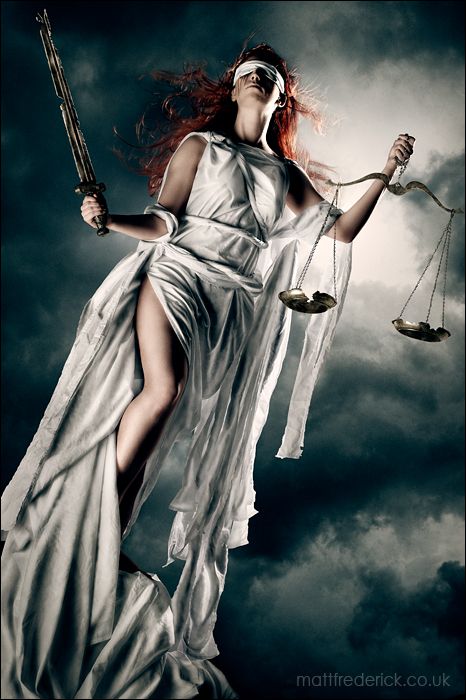
Seeing an opportunity to shine from within the dim left by Celereshél’s failing, Lílabhél gently took the keys from the king’s hand and walked confidently to the Golden Throne, calling forth the next case. In walked a man dressed in fine robes; a wealthy merchant of some kind. His hair shone with scented oils and his beard was well trimmed. Three servants tended to him, and each finger on his hands bore rings of various kinds. Next was brought in a woman whose beauty turned the head of each person present, though sadly it was that she wore naught but the gray tunic and skirt of a prisoner and her hair was bound simply in a long braid. All who beheld her wondered within their minds her splendor if it was that she was arrayed differently and the sad look upon her face was brightened with prosperity. But the sunlight of her beauty was diminished by the cloud of her current misfortune, the all of her veiled in shadow.
The merchant then began to speak in a thunderous voice, “I am called Delagrin from my birth, and I am well known in this mountain to be a good citizen and a prosperous merchant, and it is too that my wife is equally well known because of my reputation. Yet in spite of all I have done for her benefit, I have discovered infidelity in her, and thus do I seek justice for the wrong she has done to me.”
The woman stood silent while all in attendance gasped, for infidelity was a crime punishable by exile to the wastes. Lílabhél, knowing then the gravity of the situation over which she found herself presiding, looked to King Médash to see if perhaps he would bid her come off the throne in order to preside himself. But he merely nodded for her to continue. When she had regained her confidence she asked of the woman, “How do you answer this charge?”
Without pause she answered, “Innocent, my lady.”
The merchant began to sling all manner of charges at his wife, to which she simply stood stalwart, saying nothing. Lílabhél then held up her hand to silence him, bidding the woman explain herself.
“My lady, you see that my husband is a man of great renown and high reputation, an eloquent speaker and a client of the king himself. I am but a wife, and all that is well in my life is dependent upon my husband’s fortune. Even should I proclaim the truth in the voice of an angel it should not topple my husband’s charge. Therefore I stand here and say only that I am innocent and pray that God grants me justice.”
“Very well,” said Lílabhél, “then I will ask nothing further of you. Man, what evidence to you offer in support of your charge? For if she is truly guilty, her life will be forfeit.”“My lady, truly you are as wise as you are beautiful and graceful, and I know that God will grant me His justice through your judgment. It is common knowledge that a merchant like myself must be away in distant regions for sometimes a fortnight, sometimes a season, in order to do trade and to acquire the goods for which I am known and by which I provide for my wife and myself. It is that I have no son nor even a daughter, and so all my wealth is at the disposal of my wife and she alone, though I give generously to the poor and to the Royal Treasury. Yet when I returned five weeks before this day from a journey to Nubia afar off, I discovered a note in my own bedchamber, writ in a hand unfamiliar to me, and it was unsigned. The note was written to my wife, and I offer it to you for judgment.”
A guard brought a small square of parchment forward to the throne, and thus did Lílabhél read the following aloud:
“My dearest Meroldél, greetings from your dusk-love, the one who comes to you like night overtakes the day and brings peace to your troubled heart! Ah how I long to stop playing fox-and-hound with your husband; how I wish I were a wolf! But I fear him, for he is great in this city and I would not confront him. Would that I could teach you the secret desert way to my home, where he could not discover us! Then we need wait no longer for his cruel absences to see one another; how could a man part from such a jewel as you? I could not bear it long, and I hardly have the strength to bear it those times when I must! Until we hold each other again, my love, remain steadfast and know that soon enough we will lie together again, and you will have peace.”
A thick silence filled the throne room. Tears began to roll down the face of the woman Meroldél, and the merchant’s face remained stern. Lílabhél said to him, “Have you any other evidence than this unsigned note found within your home? I should require much more if I am to exile a daughter of Médash to the wastes.”
“Of course, highborn lady, for I have an article of clothing that too is strange to me and my household.” Thus did he present to the guard an amulet which was brought to the throne. “And too this signet ring of a house of which I am unfamiliar, found beneath my bed.” This also was brought to the throne by the guard, and the accused woman’s case seemed to have been dealt a death blow. Indeed the heart of Lílabhél was blown thither by the strength of the evidence, and so it was with sorrow that she asked her final question.
“Woman, called Meroldél beneath this mountain, what have you to say against this evidence?” A single tear rolled down her cheek, and when a short duration of silence had passed she spoke, saying, “My lady, I have only this to say: that I am innocent, that this letter and these articles of attire are as strange to me as they are to my husband, and if it is the contents of a strange note and the silent testimony of two pieces of jewelry that could damn a woman of this kingdom to the wastes, then I would rather suffer such a fate than take another breath of this realm’s air into my lungs.”
All present gasped and it seemed like a great weight sank into the gut of Médash, and he feared what was to come, for never before had he cause to exile any of his subjects. He prayed for wisdom upon Lílabhél, as well as the resolve he himself needed to uphold whatever judgment she handed down. Truly it was that the lady sat with great unease within her, for she saw that there was more to what lay before her than what she could see and what was presented, yet she could not determine what next the most wise course of action would be. She was, to her great dismay, utterly confounded, yet she wanted even moreso not to fail in the eyes of her king, and so it was that she felt compelled to hand down some sort of judgment, and pray that it was the just one.
“Man, it is that I have a great unease regarding your testimony, but I see no deception in your evidence. Seeing that the accused raises no testimony and presents no evidence in return, I cannot but judge favorably on your behalf.” The man clenched his fist and glared triumphantly toward the woman, who merely stood stalwart and silent, staring straight ahead. Lílabhél continued, “However, the testimony and evidence here presented is not sufficient for me to hand down the fullest punishment suitable for the crime of which your wife is accused. Therefore do I indeed banish her from the mountain, but not unto the wastes; rather do I command you, her husband, to bring her to a neighboring kingdom by the time of the next full moon, leaving with her one tenth of your wealth that she may live without fear. Until this comes to pass and the king of that land signs in testimony that the will of this court has been accomplished, you no longer have leave to do business here under the mountain.” Raising the keys before them all she said solemnly, “Thus have I spoken.”
The accused woman wept profusely, and such was her lamentation that a strong guard was called upon to carry her gently away. The merchant stormed out of the room with anger in his face like a fire, and a great murmuring arose all throughout the mountain regarding the unusual ruling. Lílabhél was so unsure of her final judgment that she could not bear to ask Médash for his thoughts regarding it and instead departed to her chambers, leaving the keys in the hands of Bhéalmal who, though with reluctance in her heart, strode with feigned confidence to the throne and sat to await the next case.
In the meantime Dauabré turned her head so as to speak in a hushed manner with the king, and she asked of him his thoughts regarding the judgment just handed down. With a worried look upon his countenance he said in equally hushed tones, “Lady, my heart burns to undo what just was done, for it seems to me that the airs of deception swirled around the accuser. I would have looked more closely upon the letter, and I would have compared it to the merchant’s own writing. I would have suspended the case until the signet ring and amulet could be matched to a house or to a kingdom. I would have done all I could to apprehend the man she was accused to have lain with in adultery. Yes, I would have done all these things and more, for though he brought to bear testimony and evidence against her it seemed in my mind that her unshakeable claim to innocence and her silent defense of that claim was greater than all her husband offered us. But, alas, my word was given, and it was that the word of whoever bore the keys and sat in my throne spoke my own words with their voice.” Dauabré nodded gravely and took all his words into her heart, pondering them carefully.
Post a Comment
Leave a Reply
You must be logged in to post a comment.

Comments (5)
How can I get Business Loans for my cousin’s business in UK?
@Nikhitalonely - Being an American, I couldn’t begin to tell you…
What an intriguing story I would love to read more so if it’s okay to you and if this is available here in your blog, let me know if I can browse trough it.
@xXxlovelylollipop - Everything up to this point in the story may be found in the past several entries and more is to come; I’m glad you like it!
@Ancient_Scribe - Thank you so much