Month: August 2011

  • The Bible in Brief

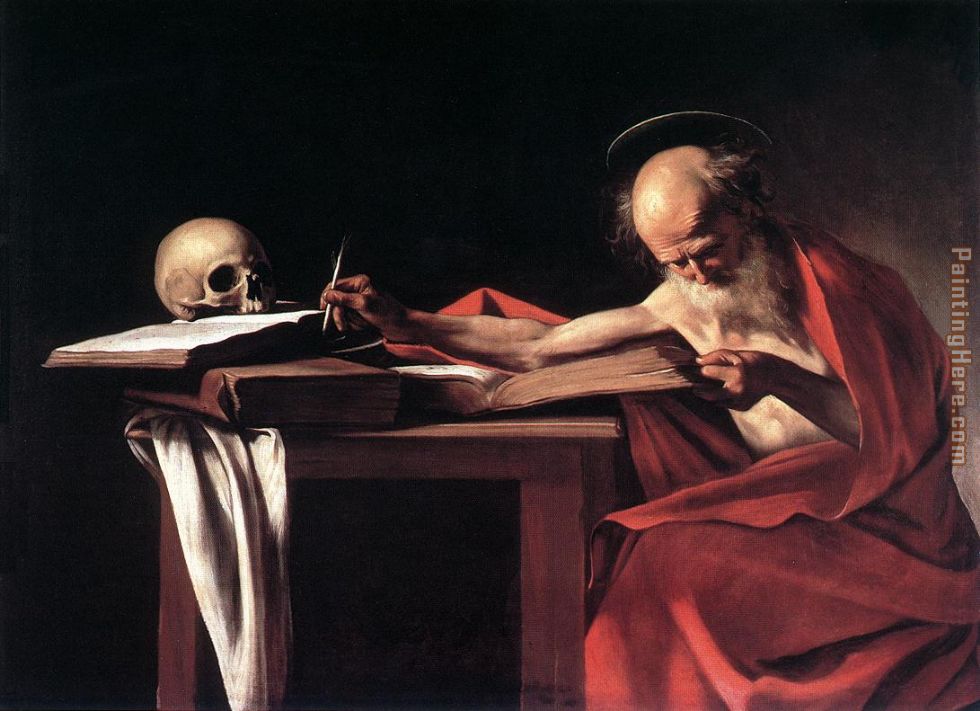
    (Caravaggio’s painting of St. Jerome, the man who led the effort to translate the Hebrew and Greek Bible into Latin)
    “Why do Catholics use another book in addition to the Bible? This seems wrong to me, just like Mormons using the Book of Mormon. (On that note, what do the Catholics think of the Book of Mormon?)” asks @MyTwoCentss. 
    It absolutely amazes me that this issue is consistently brought up in apologetics discussions between Catholics and non-Catholic Christians! I think there are two main problems that cause the constant tension here: one is a problem of not knowing history and the second is a matter of authority. The first problem is one that is beyond a lot of my own knowledge but there are good sources of information out there regarding the assembly of the canon of both the Old and New Testaments and then later attempts by Martin Luther and other Reformers to remove certain books from the Bible though they had been a part of it for many centuries. I would like to focus this post on the second problem, that being the issue of authority.
    Sadly I have heard not as a cheeky church joke but as a real experience that some preachers, being totally ignorant of history, have said from the pulpit, “If the King James Bible was good enough for Jesus (or Paul, Peter, etc.) then it should be good enough for us!” There are really some people who believe, more by ignorance than by any well-pondered decision, that the sky opened and the Bible descended from heaven, whole and entire. Well, start looking into the history and you’ll quickly learn otherwise! 
    Anyone looking at this history will begin unraveling a fascinating and complicated story of how the Bible, over the first few centuries of the Church, came to exist. There were many gospels, letters and other writings floating around Christendom, but even by the time of Irenaeus in the 2nd century the four Gospels we recognize today seem to have been pretty well universally accepted. But it probably wasn’t until the Synod of Hippo in 393 (a gathering of local churches from the surrounding area, therefore having implications only for those Christians and not the universal Church–yet!) that we begin to see a thorough canon of the Bible that looks like the one Catholics use today. The Councils of Carthage in 397 and 419 brought what was done previously at Hippo into the greater scope of the universal Church, and it is at this time, alongside St. Jerome’s efforts to translate–by the Church’s asking–the Old and New Testament writings into Latin, writings that while they were not “officially” set canonically, had already been generally accepted throughout the universal Church. While some books before these key times and afterward were disputed, still their importance and the sense of the faithful was such that they were nevertheless included and it wasn’t really until Martin Luther and other reformers began contesting them that the issue became a heated one again though it had rested for centuries. Interestingly the books Luther had the biggest problem with were precisely the ones that were giving his new theology and teachings the most trouble…
    At any rate, let’s put the history aside and just focus on those books of the Bible that Catholics and Protestants agree upon. 
    Both sides of the debate agree (praise God!) that God is the true Author of the Bible, inspiring men by the Holy Spirit to compose what they did. But if you look toward the front of any Bible you’ll notice at least one crucial bit of text that wasn’t written by a prophet, an evangelist or an apostle: the table of contents. You see, the Bible does not itself tell us what ought to be contained within it! Rather, it is only the authority of the Church given her by Christ through St. Peter, guided by the same Holy Spirit, upon which we can base our trust that if it is in the Bible it is meant to be there and if it isn’t in the Bible, then it oughtn’t be. 
    Think about it this way: Where did we learn that the Holy Spirit inspired Scripture, that what we are reading isn’t merely religious mythology but is the Word of God? Well two verses that come to mind are 2 Timothy 3:16 and 1 Thessalonians 2:13, in which St. Paul teaches precisely these things.
    But remember: the Gospels themselves likely weren’t written until the time between 68-110 AD while St. Paul likely wrote to the Thessalonians around 52 AD and to Timothy some years later; this means that when St. Paul is talking about the “scriptures” he is talking solely about the Old Testament, since they were the only scriptures that existed in his time! Yet all Christians believe that the New Testament as well was inspired by the Holy Spirit and is the Word of God. If St. Paul is only talking about the Old Testament, how did we come to expand his teaching to include the Gospels and even his own letters? 
    The Church.
    When you look at the Four Gospels, Catholic or not, you accept them as valid and belonging there in that Bible you hold. Nowhere does Matthew, Mark, Luke or John say, “God told me that this ought to be considered equal in importance and divine alongside the Jewish Scriptures.” Rather, the Church taught this, proclaimed it, and it was accepted by the faithful. The whole Bible–the “table of contents” if you will–is the product of the Church’s work and is based upon its own authority, entrusted to her by Jesus Christ. If you are not Catholic and you accept what books are in your Bible, even if there are some that were later removed or perhaps the order was switched around by someone’s preferences, you are basically saying, “As far as the presence of this text in this Bible is concerned, I accept the authority of the Catholic Church.” 
    Even when St. Paul teaches what he does about scripture, notice that he doesn’t say, “…and the Holy Spirit told me that this is the case.” No, he simply teaches. So, what; we are trusting that St. Paul knows what he is talking about? Of course we are to a degree, but it goes further; remember that he is an approved, bonafide apostle, sent by the CHURCH (as represented by Apostles like St. James, St. Peter, etc.) with the AUTHORITY to teach. We trust St. Paul ultimately because we trust the Church; if he was just some very charismatic guy with a good message he’d likely not have been included! Likewise we trust the Church that trusted St. Paul because we trust Christ who ALSO trusted His Apostles when He handed them the reins, if you will. 
    So when I look at Martin Luther and his treatment of the Bible, what crosses my mind? I see a man who, operating on his own, without any authority of his own (such as the authority that assembled the canon of the Bible in the first place) deciding what should go and what should stay. Now imagine if St. Paul was out doing things like Martin Luther, changing things and operating against the rest of the Church, even though there were practices and policies that were grating even him in those times (circumcision for example); would we have trusted his teachings at all? I certainly wouldn’t! For when I come across someone teaching about Christ and about the faith, I see unity with the Church as a sure sign that they are trustworthy. Again, in short, we know that Scripture is inspired not because of any divine revelation to us that it is so but because that is what the Church–through St. Paul and others throughout history–have taught us. If you trust the Bible, then whether you like it or not, then you trust the Catholic Church’s authority on the matter of its contents. After all, that same St. Paul teaches that we “should know how to behave in the household of God, which is the church of the living God, the pillar and foundation of truth” (1 Timothy 3:15). When I have a decision to make between trusting the Bible that the Church gives me or the Bible as Martin Luther has translated it and assembled it, I’m going to have to go with St. Paul and with history and chose the former.
    This connects, too, with the matter of the Book of Mormon. You see, the Bible is not a continued revelation of God; it is a closed matter. While the Holy Spirit can certainly reveal things about God to those who read it prayerfully or hear it proclaimed, no new scriptures will be written. You see, the Bible is a collection of writings written by those with authority to teach, be they a prophet, an apostle, etc. These men have since gone to their reward in heaven and are no longer writing; the Bible was written precisely so that their experiences and teachings could be preserved for the benefit of future generations. For a man named Joseph Smith to come along over fifteen hundred years after the final documents of the New Testament were written and claim that he had a third testament to add is highly suspect (not to mention the circumstances by which he claimed to receive inspiration for writing it, among other shady things about his story). Who gave him the authority to teach, and how is that authority rooted both in history and Christian tradition, and how are his claims supported by Scripture? I have the sense that he gets around these difficult questions by simply claiming all Christianity (including the Christianity by which he inherited any knowledge of Jesus and the Bible in the first place!) to be in apostasy, and with that said he could come up with anything he wanted. Granted, my knowledge of Mormonism is severely limited, but I wanted to at least touch on the matter a little, since it was part of the original question. 
    To answer the initial question, though, I would have to ask not why does the Catholic Bible add books, but why do Protestant Bibles remove them or reorder them so as to downplay their importance? What is their justification for doing so, and on who or what do they base their authority to do so?
     
  • Filler

    I was at the mall the other day and I saw this sign. I think I was the only person in the mall that found it funny, and I can’t decide if it is funny that the sign’s composer made a grammatical error or sad that no one seems to mind.


    I suppose many people are wearing their pants 40% off these days anyways.


    I hope to write up a quick post tonight before I REALLY go on vacation. Oy!

  • UPDATE

    THANK YOU ALL for your thoughts, prayers and support for my sister, who left the shores of Dover yesterday morning to make her attempt.


    SHE MADE IT! My sister swam the English Channel in 15 hours and 39 minutes, non-stop, never touching the boat!


    Now I imagine she will be taking a looooooooooong nap!

  • Mary, Mary Quite Controversial, Part III


    Finally, @pinktiger335 asked, “Why they (the Church) don’t mention the Virgin Mary too much but we have so much faith in her? And a lil about her appearances… like the one she made in Mexico with Juan Diego.”

    Having discussed two of the major doctrines regarding Mary, as well as her significance as highlighted by the New Testament, I hope to discuss some of the places we see Mary in the Church, chiefly the Mass and the Rosary.


    Mary in the Mass

    While she can be hard to pick out unless you are paying extra close attention, Mary makes several key appearances in the Liturgy. First I should mention, however, that I will only be speaking about the Liturgy of the Roman Church; I am not familiar enough with the beautiful rites of the other 22 Churches in communion with Rome save that they make my heart ache with how deep and powerful they are in their richness! I should say, I suppose, 21 of the other Churches since #22–those Anglicans who have entered into the Catholic communion recently (welcome home!!)–probably has pretty similar devotional practices regarding Mary. 

    In the Roman Rite, which is by far the most popular and recognizable way that the Mass is celebrated throughout the world, finds its origins in the way the Eucharist was celebrated in the Church of Rome and was carried out along the Roman highways all over the western world. The Mass that you would likely find if you stepped into a Catholic Church on any given day (yes, daily Mass!) will bring Mary into the celebration in the following usual ways:


    First, if it happens to be a Marian Feast Day such as the Solemnity of Mary, Mother of God on January 1st, the Annunciation on March 25th, the Assumption on August 15th, etc., you may very well begin Mass singing a song that features Mary. Heck, you may even walk into a church named in her honor, as was the name of the parish I was baptized in as well as the parish I grew up in (a different town, too) and later received First Communion, First Reconciliation and Confirmation!

    Ordinarily, however, Mary’s first appearance comes during the Penitential Rite when, after we have all greeted one another, we take time as a congregation not only to think about our sins but to confess, publicly and to one another, that we have indeed sinned and only Christ can do anything about it. Every man, woman, child (who can) and even the priest(s) say aloud:

    “I confess to almighty God, and to you, my brothers and sisters, that I have sinned through my own fault in my thoughts and in my words, in what I have done, and in what I have failed to do; and I ask blessed Mary, ever-virgin, all the angels and saints, and you, my brothers and sisters, to pray for me to the Lord our God.”

    Right away we seek, even before and above the other saints and the angels, the prayers and intercession of Mary, our mother. Remember in the previous post that she is the mother of the Church, the mother of every Christian. Remember also her important role at Cana when she demanded Jesus to do something for the poor people at the wedding feast, and He absolutely did it! Even the Gospel here attests to the power of Mary’s intercession, for in becoming human Jesus became subject to the Commandments as well and He will always, always honor His mother. This does not mean that we need not go to Jesus with our prayers and requests; this simply means that we may, if we wish, if it helps us even more so to love Christ, to know Him (who better to teach us than the woman who raised Him?), seek the help of Mary. When we honor Mary, remember, we honor Him as well! So, yes; here in the first part of the Mass we are already entering into that “cloud of witnesses” of which St. Paul wrote (Heb. 12:1), seeking the help, prayers and love of our heavenly mother and our many brothers and sisters, renewing the covenant of our baptism, washing our garments in the blood of the Lamb once again so that a “perfect offering may be made to the glory of His name” (a later part of the Mass, at the end of the Offertory). 

    Next Mary may, depending upon the day, appear in the readings. She is mentioned directly in Acts remember, as well as the Gospel, but even St. Paul refers to her indirectly at least one time when he speaks of Jesus being “born of a woman, born under the law” (Gal. 4:4). Sometimes the psalm in between readings may be a musical arrangement of Mary’s Magnificat. The subsequent homily may of course make reference to Mary, too.


    Mary’s next appearance comes during the Creed, which normally is only recited on Sundays and feast days. The Creed is not only a public profession of what are the basic, non-negotiable beliefs of the Church and thus (hopefully!) our own beliefs, but they tie us in with our history; Catholics are a people, like their Jewish predecessors, that remember where they came from. In addition to our history as we just recalled in the readings of the day the Creed takes us back to our persecuted origins, our martyr beginnings, as well as showing us in a nutshell how God–Father, Son and Holy Spirit–labored for our salvation. Mary is, quite literally, at the very heart of the Creed:

    “For us men (meaning mankind here, not just men and not women!) and for our salvation he (meaning the Son) came down from heaven: (here we all bow our heads in honor of the Incarnation of God, the greatest moment in all of human history) by the power of the Holy Spirit he was born of the Virgin Mary, and became man.” 


    During the Liturgy of the Eucharist Mary again appears. Depending again on the feast day, or even on occasion during Ordinary Time, she may appear mentioned in the preface prayer (the prayer right at the beginning of the Liturgy of the Eucharist), for example this preface for Sundays in Ordinary Time:

    “Father, all-powerful and ever-living God, we do well always and everywhere to give you thanks through Jesus Christ our Lord. Out of love for sinful man, he humbled himself to be born of the Virgin. By suffering on the cross he freed us from unending death, and by rising from the dead he gave us eternal life. And so, with all the choirs of angels in heaven we proclaim your glory and join in their unending hymn of praise:”

    And then we burst into the “Holy, Holy, Holy…” It isn’t every day you get to sing along with the whole choir of heaven using the same words they are! 

    On the Feast of the Annunciation the preface prayer mentions: “He came to save mankind by becoming a man himself. The Virgin Mary, receiving the angel’s message in faith, conceived by the power of the Spirit and bore your Son in purest love.” 

    On the Feast of the Assumption is perhaps my favorite preface prayer in which Mary appears: “Today the virgin Mother of God was taken up into heaven to be the beginning and the pattern of the Church in its perfection, and a sign of hope and comfort for your people on their pilgrim way. You would not allow decay to touch her body, for she had given birth to your Son, the Lord of all life, in the glory of the Incarnation…”


    After the Sanctus fades away we enter into the Eucharistic Prayer, generally one of four prayers. Mary appears in all four of them in different places. 

    One thing I love about the first Eucharistic Prayer, one that often is used on big feast days or the feast days of martyrs, is that it ties us in again with our roots. We see Mary in this prayer at the head of a whole army of martyrs:

    “ In union with the whole Church we honor Mary, the ever-virgin mother of Jesus Christ our Lord and God. We honor Joseph, her husband, the apostles and martyrs Peter and Paul, Andrew, James, John, Thomas, James, Philip, Bartholomew, Matthew, Simon and Jude; we honor Linus, Cletus, Clement, Sixtus, Cornelius, Cyprian, Lawrence, Chrysogonus, John and Paul, Cosmas and Damian and all the saints. May their merits and prayers gain us your constant help and protection.”

    In Eucharistic Prayer II, probably the most commonly-used of the four, the priest says to the Father, we similarly see her in relation with the rest of the saints in heaven, as well as her role in praying for we living pilgrims here on earth: 

    “Remember our brothers and sisters who have gone to their rest in the hope of rising again; bring them and all the departed into the light of your presence. Have mercy on us all; make us worthy to share eternal life with Mary, the virgin Mother of God, with the apostles, and with all the saints who have done your will throughout the ages. May we praise you in union with them, and give you glory through your Son, Jesus Christ.”

    Eucharistic Prayer III is very similar but reminds us that we, too, are meant to share in a similar life as she, remind us as well of her important role as help and intercessor:

    “May he (Jesus) make us an everlasting gift to you and enable us to share in the inheritance of your saints, with Mary, the virgin Mother of God, with the apostles, the martyrs, and all your saints, on whose constant intercession we rely for help.”

    The fourth Eucharistic Prayer reminds us not only of all the above but really, I feel, of Mary our Mother and how we hope to be with her and everyone else in heaven, in her “company” as the prayer asks:

    “Remember those who take part in this offering, those here present and all your people, and all who seek you with a sincere heart. Remember those who have died in the peace of Christ and all the dead whose faith is known to you alone. Father, in your mercy grant also to us, your children, to enter into our heavenly inheritance in the company of the Virgin Mary, the Mother of God, and your apostles and saints. Then, in your kingdom, freed from the corruption of sin and death, we shall sing your glory with every creature through Christ our Lord, through whom you give us everything that is good.”


    After the Liturgy of the Eucharist, the Our Father, Agnus Dei, communion and such, Mary would only appear again either in the music or perhaps in the closing prayer, as always depending upon the occasion. As the saying goes “lex credendi, lex orandi;” in English, basically, “the Church believes as she prays,” so you can see that the prayers of the Church are not only prayers but professions of faith. So if you really want to find out what the Church believes regarding Mary, come to Mass and pay attention!


    Christ’s Mother, Our Mother: the School of the Rosary


    The Rosary is perhaps the most popular and most recognizable devotional practice of the Catholic Church. It has almost become synonymous with Catholicism and I have heard old stories that Martin Luther even had a strong devotion to Mary and to praying the Rosary, and that he prayed it even while on his death bed. Really if you look at the casts of his hands that accompany his death mask, it seems to me that he was doing precisely that, holding the Rosary in his right hand while keeping track of the beads with his left:

    So what is the Rosary? Without going into the stories and legends of its origins I will focus primarily on “what it does,” and what it does is it teaches you about the life of Jesus Christ and, through the patient instruction of the one person in the entire world who knew Him best, teaches you to see Him more clearly, love Him more dearly and follow Him more nearly (words popularized for certain by Godspell but first attributed to an English saint and even referred to by St. Ignatius of Loyola in his Spiritual Exercises!). 

    Most people think of the Rosary and think also of so many Our Fathers and so many Hail Marys (itself a very scriptural prayer!). Well, yes and no. These prayers, I feel, serve two primary purposes: first, to honor God our Father as well as to honor the Incarnation and second to help dispose our minds to contemplating the life of Christ. They are (especially the Hail Marys) like background music to the real prayer of thinking and praying very deeply upon the matter of Jesus’ life, passion, death and resurrection.

    The Rosary is not merely a series of rote prayers but an opportunity to mediate on four sets of Mysteries: the Joyful, the Luminous, the Sorrowful and the Glorious. Each category breaks down into five mysteries of Christ’s life as follows, the contemplation of which is “set” to ten Hail Marys apiece:

    The Joyful Mysteries: The Annunciation (Lk. 1:26-38), the Visitation (Lk. 1:39-56), the Nativity (Lk. 2:1-20, Mt. 2:1-11), the Presentation of Our Lord at the Temple (Lk. 2:21-40) and the Finding of Our Lord in the Temple (Lk. 2:41-52).

    The Luminous Mysteries: The Baptism of Our Lord (Lk. 3:21-22, Mt. 3:13-17, Mk. 1:9-11, Jn. 1:29-34), the Wedding at Cana (Jn. 2:1-11), the Proclamation of the Kingdom (Mk 1:15, 2:3-13, Lk. 7:47-48, Lk. 4:16-21), the Transfiguration (Lk. 9:28-36), and the Institution of the Eucharist (Lk. 22:15-20, Mt. 26:26-29, Mk. 14:22-25).

    The Sorrowful Mysteries: The Agony in the Garden (Mt. 26:36-46), the Scourging at the Pillar (Lk. 22:63-65, Jn. 19:1, Isaiah 52:14-15), the Crowning With Thorns (Mt. 27:27-30, Jn. 19:2-5), the Carrying of the Cross (Lk. 23:26-32, Mt. 27:31-34, Mk. 15:20-24, Jn. 19:16-17), and the Crucifixion (Jn. 19:18-30, Mk. 15:25-37, Mt. 27:28-50, Lk. 23:33-46).

    The Glorious Mysteries: The Resurrection (Lk. 24:1-12, Mt. 28:1-10, Mk. 16:1-7, Jn. 20:1-17), the Ascension (Acts 1:6-11), the Descent of the Holy Spirit (Acts 2:1-4), the Assumption of Mary (Rev. 11:19-12:1), the Coronation of Mary as Queen of Heaven (Rev. 12:1 again, Genesis 3:14).

    As you can see, the Rosary is quite Scriptural! Very nearly every mystery here can be found in Scripture, and contemplating each mystery in silent prayer or even communal prayer can only help you better to know Jesus and to imitate His example. I believe the close association of the Rosary to Mary is primarily because she was present with Christ at every step, from the Annunciation through His public ministry, from the Passover (surely He would celebrate the Passover with His mother for crying out loud!) all the way to the Cross, rejoiced with the apostles at His resurrection (many ancient beliefs professed that after His rising He first went to see His mother), and was present in the Upper Room at Pentecost. You cannot separate Mary from the Gospel or from Christ; to contemplate the life of one is to contemplate the life of the other!

    Finally the Rosary ends with a beautiful prayer:

    “Hail Holy Queen, mother of mercy, our life, our sweetness and our hope. To thee do we cry, poor banished children of Eve, to thee do we send up our sighs, mourning and weeping in this valley of tears. Turn then, most gracious advocate, thine eyes of mercy toward us; and after this our exile show unto us the blessed fruit of thy womb, Jesus. O clement, O loving, O sweet Virgin Mary!”

    You see, she is indeed our Queen if she is the Mother of our King; the Queen-Mother, in fact! She is the mother of mercy, for she gave birth to our Merciful Lord; mother of our life for only through Jesus do we come to have life; mother of our sweetness for without Christ life is drab and wearisome; and mother of our hope because without Christ, we have none whatsoever.


    (In the interest of time and the length of this post already, I’m afraid I’m going to forgo touching upon various Marian Apparitions…)

    I hope that this series on Mary has proved enlightening, interesting and helpful! As you can see, Mary is extremely important in the lives not only of Catholic Christians, but ought to be vital for every Christian. While Catholics are often told that our Marian doctrines are made-up, un-biblical and utter nonsense I hope that such people can see more clearly that they are not that at all but, considering what all true Christians believe about Christ, we can come to know a great deal about Mary that must be true, and while her Immaculate Conception and Assumption are not explicitly stated in Scripture, neither does Scripture deny them. We also can see in the Gospel itself how important Mary truly is; we see this in the parallel with Genesis as Jesus becomes the New Adam and reestablished the entire human race as the Chosen People of God. Finally we see that Mary plays an important role in the worship and devotional life of the Church, but always in order to help us better know and love Jesus Christ, keeping the focus always upon Him and never herself, that her soul might always “proclaim the greatness of the Lord!”


    NOTE: I will be on vacation until August 13th, so I won’t be able to update until after then! I think, however, that this entry and the previous offer a lot for you all to ponder, so please do spend some time with them! Next I hope to move on to the next most popular inquiry regarding *gulp* Purgatory!

  • Mary, Mary Quite Controversial, part II

    This (apparently massive) post will continue on to the following request left in the comments of Part I (thank you all, by the way, for the generous response!), as suggested by @OutOfTheAshes:

    “I’d love if you addressed Jesus’ own comments about Mary. Mary doesn’t make all that many appearances in the Gospels, and several times when she does, Jesus seems to downplay her role (as in Mark 3:32-35 or Luke 11:27-28). The Church’s emphasis on the role of Mary always seemed to me to be at odds with his statements, which seem to place her no higher than any who “does the will of my Father.”

    Don’t worry @pinktiger335; your questions will be addressed in Part III! I realized that, in light of the above request, it might be worthwhile to go through some Scripture and talk about the importance of Mary so that once we start talking about her place in the life of the Church, we can see at least how important she is in the Gospels and (gasp!) the Book of Acts.


    Mary first appears in the Gospel in Matthew 1:16 as part of Christ’s genealogy: “…Joseph, the husband of Mary. Of her was born Jesus who is called the Messiah.” 

    This should tell us right away that Mary is incredibly important. INCREDIBLY important! After all, if it wasn’t for Jesus being the Messiah, why would the author of Matthew write anything further? And note that King David–whose presence in Christ’s genealogy is crucial for the sake of prophecy–does not have his mother mentioned at all! Also, back in that time what was most important when it came to ancestry was who your father was, and his father, and so on. Here we see the break; Joseph is not the father of Jesus. But MARY is His MOTHER, as we are reminded in v. 18.

    She appears two verses later when the evangelist basically tells us what we just saw at the end of the genealogy: that Mary is the mother of the long-awaited Messiah and “Joseph her husband, since he was a righteous man, yet unwilling to expose her to shame, decided to divorce her quietly” (v. 19). Thankfully, an angel put a stop to that. But if he was truly righteous (which he must have been if it was noted in the Gospel!) he would be utterly in awe when he was told that his wife, this virgin girl from Nazareth, was pregnant with the Messiah that he and that long genealogy of ancestors we just read had been waiting for. So of COURSE he took her into his home and did not divorce her; to divorce her would be to divorce the Messiah, too. 

    Next we see her in chapter 2, verse 11 when the Magi come to visit and “they saw the child with Mary his mother.” One would think that, considering the culture of the time, the Magi (kings or at least foreign dignitaries) would have dealt directly with the man of the house, Joseph. But we don’t hear about Joseph until the angel tells him to “Rise, take the child and his mother, flee to Egypt,  and stay there until I tell you” (v. 13). From here on (I think) Mary is no longer referred to as Joseph’s wife, but Jesus’ mother. Remember, too, how incredulous people in Jesus’ hometown would later refer to Him as “the son of Mary” (Mt. 13:65, Mk. 6:3).

    Mary makes a big entrance in Luke’s Gospel as well when the archangel Gabriel, sent by God to speak on GOD’S behalf–the angel’s words were not his own, but God’s mind you–says, “Hail Mary, full of grace! The Lord is with you!” (1:28). Incredible! God, though an angel, is HAILING HER and saying “I am with you!” And when the angel relays to her God’s plan for the salvation of the world, she delivers–by the special grace of her afore-discussed sinless state in Part I of this blog–a “yes” that echoed across the whole world and changed human history for all time. Then her relative, Elizabeth, calls her “most blessed among women” (1:42) before Mary launches into a beautiful “it-isn’t-about-me” exclamation, a true magnificat that reminds us an essential truth that the Church teaches though many forget it: the Church’s devotion towards and reverence of Mary is not about Mary, but rather about her Son. In her magnificat (vs. 46-55) Mary tells us this in her own words.

    Note, too, in Luke’s second chapter when the shepherds came it was Mary who kept the incident in her heart, and at Jesus’ circumcision it was to her, not Joseph, that Simeon spoke (vs. 34-35). Then when they finally find Jesus in the temple twelve years later, it is Mary who speaks to Him and expresses the anxiety she and Joseph felt and it was also her who treasured His upbringing in her heart; Joseph and his memory of those years aren’t mentioned at all. It seems, looking at the synoptic Gospels, that Mary was not only important, but her words, actions and even her EMOTIONS were worthy of note. But it is in John’s Gospel, I would say, that Mary begins to take on an even greater importance in the life of the Church.


    I am sure that most people who read the beginning of John’s Gospel think instantly of the Book of Genesis:

    “In the beginning, when God created the heavens and the earth, the earth was a formless wasteland, and darkness covered the abyss, while a mighty wind swept over the waters. Then God said, “Let there be light,” and there was light. God saw how good the light was. God then separated the light from the darkness. God called the light “day,” and the darkness he called “night.” Thus evening came, and morning followed–the first day” (Genesis 1:1-5)

    “In the beginning was the Word, and the Word was with God, and the Word was God. He was in the beginning with God. All things came to be through him, and without him nothing came to be. What came to be through him was life, and this life was the light of the human race; the light shines in the darkness, and the darkness has not overcome it” (John 1:1-4)

    What happens when we carry on with this pattern? We see a second  day (v. 29) when John sees Jesus and says, “Behold the Lamb of God!” and recounts his baptism of the Messiah (notice the references to the sky and water, similar to Genesis: Day 2!) , as though everything previous to that moment was a long, primordial “first day.” In verse 35 we are told of yet a third day when John dispatches two of his disciples to go follow that Lamb, and verse 43 again tells of a fourth day when Jesus goes to Galilee and finds a few more disciples, including Nathan. 

    Looking back to the third and fourth days of Creation in Genesis we see that on the third day all the fruit-bearing trees come into existence; what does the Gospel note with unusual specificity is the particular type of tree that Jesus finds Nathaniel under on the “fourth day?” A fig tree. But the relevance of that find is that it happened on the fourth day, the day during which Genesis tells us that:

    “…God said: “Let there be lights in the dome of the sky, to separate day from night. Let them mark the fixed times, the days and the years, and serve as luminaries in the dome of the sky, to shed light upon the earth.” And so it happened: God made the two great lights, the greater one to govern the day, and the lesser one to govern the night; and he made the stars. God set them in the dome of the sky, to shed light upon the earth, to govern the day and the night, and to separate the light from the darkness. God saw how good it was. Evening came, and morning followed–the fourth day” (v. 14-19).

    Now, what does John says Christ is a little earlier in his Gospel? “What came to be through him was life, and this life was the light of the human race; the light shines in the darkness, and the darkness has not overcome it…The true light, which enlightens everyone, was coming into the world. He was in the world, and the world came to be through him, but the world did not know him” (vs. 3-5, 9-10). You see, before that “fourth day,” Nathaniel lay beneath that tree in darkness but once the “true light” came into the world and shone upon him, that is when he began to see clearly, and suddenly the world truly came to be; the fifth and sixth days all mash together and this chapter ends with Nathaniel referring to Jesus as “the Son of God” (v. 49) and Jesus refers to Himself as “the Son of Man” (v. 51), both of which remind us of Adam who came into being on the sixth day of Creation (see Luke 3:38 and, of course, “son of man” means “son of Adam!”). Thus we see Jesus as the New Adam (see Romans 5:14, 1 Cor. 15:22, 45), fully revealed to us to the world not only as the Messiah or even as the Son of God (as John testified earlier) but also the Son of Man, a human being.

    ALL THAT to arrive at Cana in John chapter 2 and, yes, this has everything to do with Mary, too! 

    Genesis 2:1-2 tells us “Thus the heavens and the earth and all their array were completed. Since on the seventh day God was finished with the work he had been doing, he rested on the seventh day from all the work he had undertaken.”

    John 2:1-2 tells us “On the third day there was a wedding in Cana in Galilee, and the mother of Jesus was there. Jesus and his disciples were also invited to the wedding.” Remember in John 1 we saw four days? This is three days later; the seventh day. What is Jesus doing after all His work rounding up His disciples and preparing to build up His Church? He’s relaxing at a wedding celebration with His family and friends.

    But then, crisis! The newlyweds have run out of wine; their day of bliss and plenty is in jeopardy! Likewise if we skip past the retelling of Creation in Genesis 2:4-25 we come to the crisis of the seventh day when the serpent appears and claims that while God may have provided everything for their life of bliss on the eternal Sabbath, He’s holding back. In both crises we see the women in the spotlight; they are the ones who come to know about the crisis and make the first move. Paul describes the actions of the latter woman well in his first letter to Timothy when he writes, “Further, Adam was not deceived, but the woman was deceived and transgressed (2:14). What did Mary, the woman in John’s “New Genesis” do?

    John 2:3-5 “When the wine ran short, the mother of Jesus said to him, “They have no wine.” (And) Jesus said to her, “Woman, how does your concern affect me? My hour has not yet come.” His mother said to the servers, “Do whatever he tells you.”

    We see here that instead of trying to solve this crisis on her own, Mary goes straight to God. As one ancient Christian writer said, “Mary’s obedience undid the knot of Eve’s disobedience.” Some people, as @OutOfTheAshes began to point out, see Jesus’ response of “woman” as Him downplaying the importance of His mother. However, when we look back at Genesis to the creation of Eve, what do we find?

    “This one, at last, is bone of my bones and flesh of my flesh; This one shall be called ‘woman,’ for out of ‘her man’ this one has been taken” (2:23).

    John calls this to mind when Jesus looks at His mother, she who is coming on behalf of the troubled and sorrowing, and calls her “woman;” here we see the New Adam naming the New Eve! And look at the beautiful reversal here, where it is in fact MARY that could say of Jesus, “This one, at last, is bone of my bones and flesh of my flesh; This one shall be called ‘the New Man,’ for out of ‘His woman’ this one has been taken.” Instead of man and wife becoming one flesh (Genesis 2:24), were not Jesus and Mary one flesh during her pregnancy? Were they not completely revealed to one another, feeling no shame (Genesis 2:25)? We see, then, that Jesus calling His mother “woman” is not snippy or insulting at all but rather a tremendous honor and an awe-inspiring revelation to us. But a revelation of what?

    Fast forward from this beautiful day of rest to John 12:1. The evangelist notes that Jesus’ journey to Jerusalem begins by his return to Bethany where he had raised Lazarus from the dead, after which He went to hide out in a town called Ephraim (11:54). This return to Bethany and the beginning of His one-way trip to Calvary, occurs “six days before Passover;” literally six days before He would die. What do we see, then, six days later?

    John 19: “Standing by the cross of Jesus were his mother and his mother’s sister, Mary the wife of Clopas, and Mary of Magdala.”

    We see the New Eve standing beneath the New Tree–the Cross–and looking upon the very Fruit of her Womb (Luke 1:42), now hanging above her head. Whereas the first Eve “saw that the tree was good for food, pleasing to the eyes, and desirable for gaining wisdom” (Genesis 3:6), the Cross before Mary likely was seen by many as a tree of death, a horrific sight and a testimony to the folly of a foolish man.

    So there she stands, the mother of Jesus, and again the New Adam speaks to the New Eve…

    “When Jesus saw his mother and the disciple there whom he loved, he said to his mother, “Woman, behold, your son.” (v. 26)

    Do you remember Cain and Abel, when the first Eve lost her son? Soon enough she received Seth and what was it that she said?

    “God has granted me more offspring in place of Abel,” she said, “because Cain slew him.” (Genesis 4:25)

    Jesus (GOD!) grants Mary another son in place of Himself, her son who (remember Abel’s offering in Genesis 4:4!) was offering Himself as a lamb to God, who was likewise brutally slain.” This beloved disciple is the first of many children; just as it was through Seth that the whole line of men would spring up from which would come the Messiah Himself (Luke 3:23-38) so this disciple was the first entrusted to the motherhood of Mary, the New Eve, the new mother of the new humanity of which that disciple was the first member. Where are the rest? Now we leave John and move ahead to Acts, written (as has long been believed) by the same author of Luke’s Gospel.

    After God rested on the seventh day (that terrible, dark day when Jesus lay dead in the tomb!), and after Jesus had appeared to them several times, the Book of Acts tells us that they returned to Jerusalem and “when they entered the city they went to the upper room where they were staying, Peter and John and James and Andrew, Philip and Thomas, Bartholomew and Matthew, James son of Alphaeus, Simon the Zealot, and Judas son of James. All these devoted themselves with one accord to prayer, together with some women, and Mary the mother of Jesus, and his brothers” (Acts 1:13-14). 

    Notice here that in that time of fear, hiding out in the Upper Room (see John 20:19), Mary the mother of Jesus was with them; it seems like she has been given more children since that beloved disciple! See here as well the primordial Church, the Mystical Body of Christ, beginning to be formed from the dust. Then, once all the dust is collected with the election of Matthias to take over for Judas, new life is breathed into that dead body and the Mystical Body of Christ–the Church–is born! 

    What about Mary? Here is something amazing: remember in the beginning of Luke’s Gospel when Jesus is conceived? Gabriel says to her in Luke 1:35 that “”The holy Spirit will come upon you, and the power of the Most High will overshadow you. Therefore the child to be born will be called holy, the Son of God.” Later in Acts Luke, when describing the Holy Spirit at Pentecost, uses this same image of the Holy Spirit descending upon the fledgling Church and suddenly the children of God are born into the world, Mary there in their midst when it all happens. Not only is she the mother of Jesus, but also of the Mystical Christ, alive in His Church. And no, we haven’t stopped looking at Genesis! While Luke did not use a lot of Genesis imagery (in fact I can’t think of any!) in either of his texts (his Gospel and Acts), what happens after this “rebirth” of Christ into the world reminds me of Genesis 4:26…

    “To Seth, in turn, a son was born, and he named him Enosh. At that time men began to invoke the LORD by name.”

    At Pentecost we see Mary, formerly only the mother of Jesus, then the mother of the beloved disciple, then the mother of them all, now come fully into her motherhood of Christ both really as well as mystically, and we see that her “Seth” was the first of many “Enosh’s” and it was upon the birth of all those children into the world, by the Holy Spirit, that men began to evoke the LORD by name–the name of Jesus Christ.


    For if the Church truly, really, is Christ’s Body–in other words, the Church = Christ–is not Mary truly His mother, as the Gospels attest time and time again? By virtue of her motherhood of Christ both by giving birth to Him but then being entrusted with His Mystical Body just before His death, she is also the mother of the  Church, of each and every baptized Christian. 

    My Christian brothers and sisters, Catholics and non-Catholics alike, if you are baptized you belong to Christ’s Body; you are a part of Him. If by Him you have come to have a Father in God just as He has a Father, then by virtue of the same you also come to have a mother, just as He does. We can see this in the Gospels, as I’ve tried to illuminate here. She is the mother of Jesus to whom we belong; she is the New Eve of the New People of God. Hopefully by all of this you begin to see why she plays such an important role in the life of the Church and has since ancient times.